
Know what happened. Know what needs attention.
A shared care log for check-ins, concerns, appointments, and handoffs. No AI health guesses. No medical claims.
Caring for a parent shouldn't run on memory and group texts.
Most families coordinate care in a thread that was never built for it. The result is missed handoffs, repeated questions, and one person carrying more than their share.
Group texts bury decisions
"Who's driving Tuesday?" scrolls away under forty other messages. Nothing is settled, and no one can find it later.
Updates are inconsistent
One sibling writes paragraphs, another sends a thumbs-up. There's no shared shape to what "checking in" even means.
One person becomes the default
The nearby sibling quietly absorbs calls, rides, refills, and worry until they're stretched thin and resentful.
Remote family lacks context
Relatives two time zones away only hear the emergencies. They want to help but don't know what's already handled.
Helpers need boundaries
A paid aide or neighbor should log a visit without seeing every private family note or financial document.
Couples need separate histories
Mom and Dad have different meds, moods, and appointments, plus a shared household. One thread can't hold all three.
Three steps the whole circle can keep up with.
No training, no project-management overhead. Check in, flag what changed, hand it off, and everyone is looking at the same record.
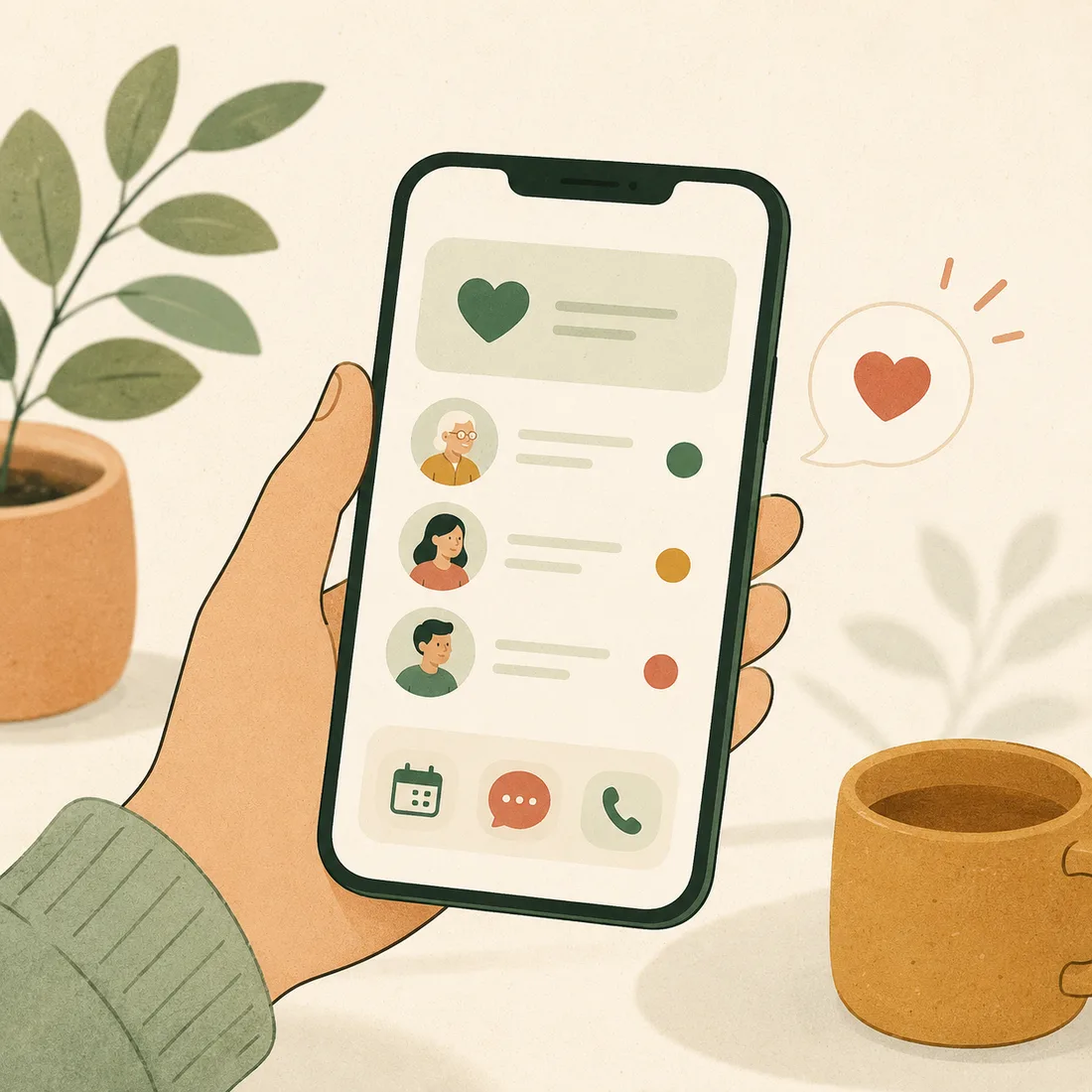
Check in
Anyone in the circle logs a remote or in-person check-in in under a minute. Structured fields mean every update captures the same things.
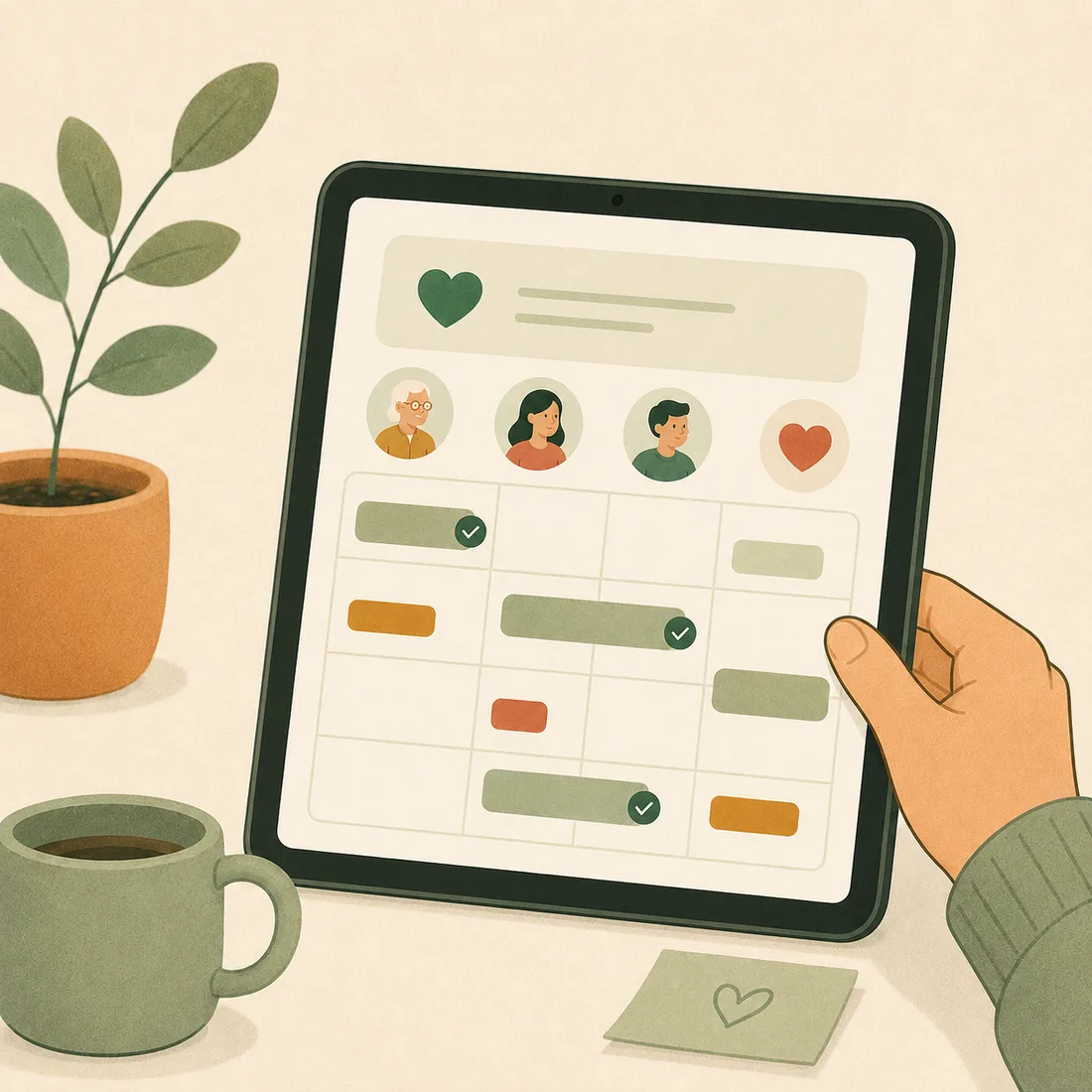
Flag what changed
Note a concern, task, appointment, low supply, or a useful link. Each one gets a category and lands in the right place.
Hand off clearly
Assign an owner and a due date. The timeline keeps a timestamped record, so nothing depends on someone remembering.
One circle, organized like tabs.
Each parent keeps a separate timeline and care history. The household holds what they share. Today surfaces only what needs attention now, so nothing important hides inside a single thread.
Today
What needs attention now, computed from rules instead of everything that ever happened.
Mom & Dad
Separate timelines and care histories. Different meds, moods, and appointments stay distinct.
Household
Shared supplies, home safety, documents, and appointments that affect both.
Concerns
Open, watching, and resolved across both parents and the home.
Remote check-in, Mom
~50sThe same questions every time, in under a minute.
Structured fields mean a check-in from the nearby sibling and one from a remote relative capture the same things. No blank-page paralysis, no "what should I even report."
Toggle to compare the two check-in types. Every field is optional except the one that confirms contact was made.
Every concern has an owner, a due date, and a status.
A concern isn't resolved because someone said "I'll handle it" in a text. It's resolved when the record says so, with the category, severity, and who's accountable visible to everyone.
Everyone helps. Not everyone needs to see everything.
Three roles keep contribution easy and boundaries clear, so a trusted helper can log a visit without opening the family's private history.
Owner
Sets up the care circle, adds recipients, invites people, and assigns roles. Usually the sibling who started it.
Family
Adds check-ins, concerns, tasks, and appointments, and can resolve concerns. The full shared record.
Helper
Contributes check-ins and notes within a scoped view. Sees what they need to help, not the whole history.
Scoped = a helper sees only the recipients and contexts they've been added to.
Foveia doesn't guess about health. It follows rules you can read.
No AI inference about health, no diagnosis, no predictions. Attention is elevated only from explicit, visible conditions, so when something is flagged, you know exactly why, and you can trust it. Clear, rule-based summaries are on the roadmap; guessing about your family's health never will be.
Keep documents where they already live.
Foveia links to the Google Drive folder, pharmacy portal, bill, prescription, or appointment instructions you already use. It stores the link and a label, never the file itself.
Linked, not uploaded
We keep the link metadata. The document stays in its source of truth, with its own permissions.
Focused by design
No version sprawl, no "which copy is current," no turning a care log into a document graveyard.
The tools you're using weren't built for this.
Texts, spreadsheets, and clinical apps each solve a different problem. Foveia is built for the one you actually have: coordinating a family.
| Group texts | A shared spreadsheet | Medical / EHR apps | Foveia | |
|---|---|---|---|---|
| Built for family care coordination | No | No | Sort of | |
| Structured, consistent check-ins | No | Sort of | Sort of | |
| Every handoff has an owner + due date | No | Sort of | No | |
| Separate history per parent | No | Sort of | ||
| Scoped access for paid helpers | No | No | No | |
| Surfaces what needs attention now | No | No | Sort of | |
| No AI guessing, no medical claims | No | |||
| Set up in an afternoon | Sort of | No |
Trust is the product. So the proof has to be real.
Foveia makes deterministic, no-guessing promises about care coordination. The same standard applies to how we write: guides are reviewed for clinical plausibility before they go up.
Our guides are written by family-care coordinators and reviewed for clinical plausibility before publishing. Named medical and social-work reviewers will appear here once they've signed off.
Not sure where to start? We wrote the playbook.
Practical, no-jargon guides for coordinating a parent's care: splitting the load with siblings, long-distance caregiving, check-in checklists, and more. Free to read, no sign-up.
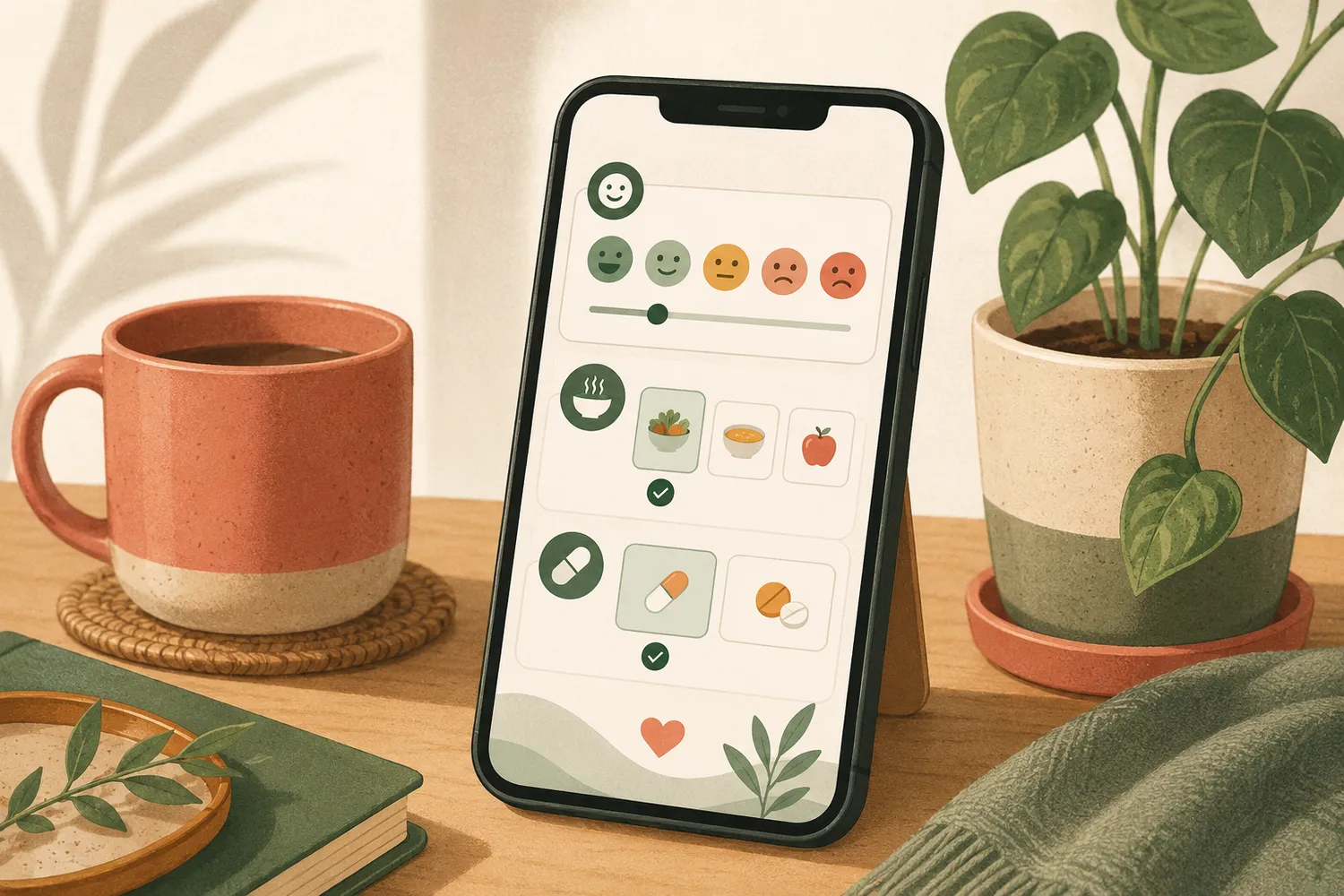
Elderly parent check-in checklist
Use this elderly parent check-in checklist template for phone and in-person visits, with repeatable questions, follow-ups, and clear ownership.

How to split caregiving between siblings fairly
When one sibling does everything, resentment follows. Here's how to divide caregiving responsibilities fairly across distance and keep the peace.
10 signs your aging parent may need more help at home
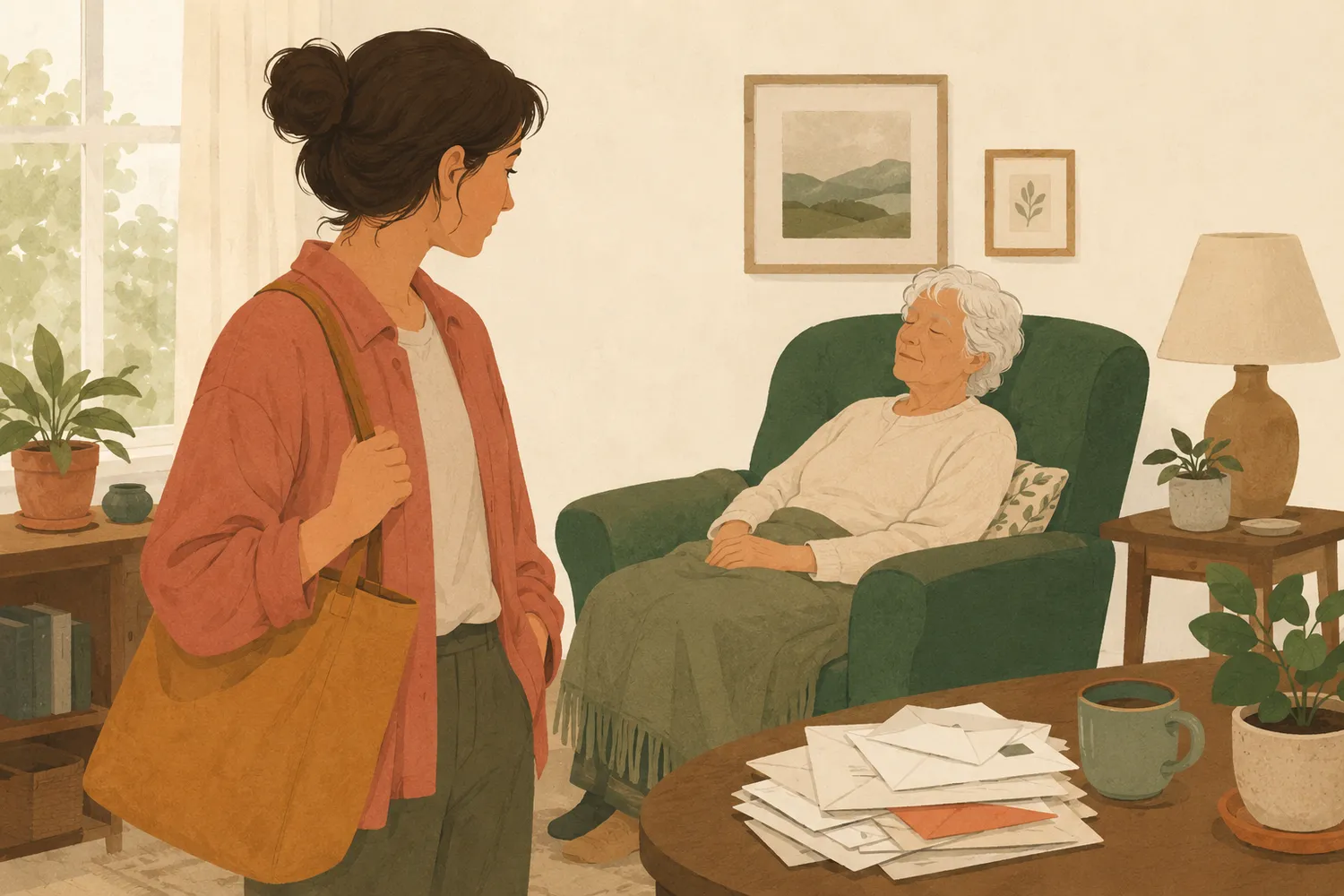
Subtle changes are easy to miss between visits. Ten everyday signs that an aging parent may need more help at home, and how to track them as a family.
One plan, built for one family.
Everything a care circle needs, without enterprise tiers, seat math, or add-ons you'll never use.
- One care circle
- Up to two care recipients
- Unlimited family & helper invites
- Structured remote and in-person check-ins
- Shared timeline, concerns & handoffs
- Tasks and appointments with owners
- External links to your documents
- Role-based privacy (Owner / Family / Helper)
- Deterministic attention rules, no AI guessing
The things families ask first.
What exactly is Foveia?
Is this a medical device or a health app?
Do we need to be tech-savvy to use it?
How many parents can one circle cover?
What do you mean by 'deterministic, no AI guessing'?


Less guessing. Fewer repeated texts. A clearer handoff for everyone helping.
Start a care circle, invite your family, and put the next check-in on the record instead of in a thread.