Elderly parent check-in checklist
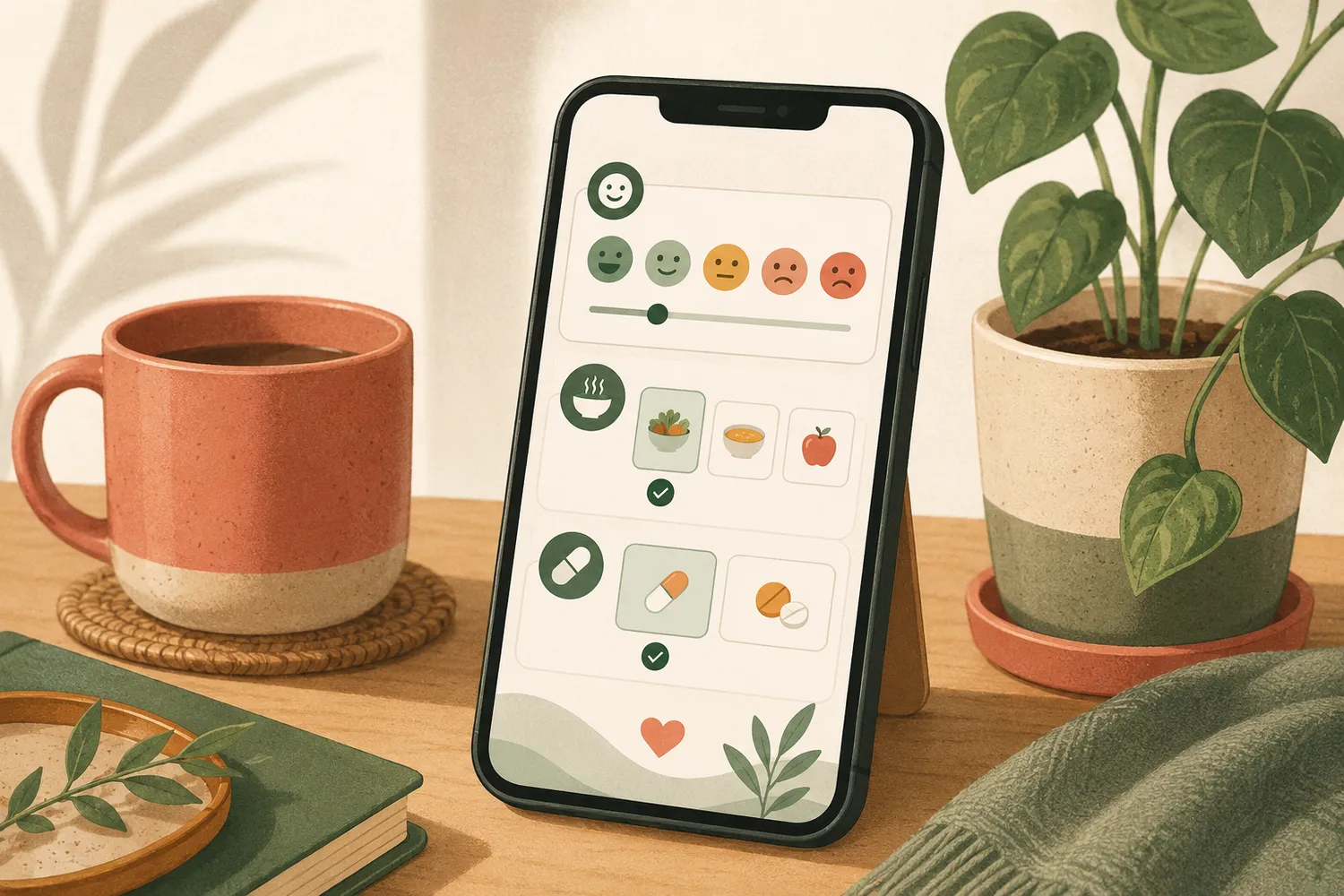
"How's Mom?" is a hard question to answer well. Fine tells you nothing. The fix is a consistent check-in — the same handful of things, every time — so individual updates add up to a picture you can actually read over weeks and months.
Here's a checklist you can use today, whether you're calling or visiting. Keep it short; the goal is under a minute, not an interrogation.
Remote check-in (phone or video)
- Contact made? Did you actually reach them (vs. left a voicemail)?
- Mood / state — bright, flat, anxious, confused? Note changes from usual.
- Eating & hydration — did they have a real meal today?
- Medication — taken as expected, as far as you can tell?
- Anything off? Sleep, pain, a new complaint, a story that didn't add up.
- Follow-up needed? If yes — what, and who owns it?
In-person check-in (a visit)
Everything above, plus the things you can only assess in the room:
- Medication organizer — is it being used correctly? Refill it for the week.
- Home safety — rails, loose rugs, lighting, expired food, smoke detectors.
- Supplies — what's running low? (Add it to the shared list before you forget.)
- Mobility — any new unsteadiness, furniture-cruising, or reluctance to walk?
- Mail & bills — piling up? A pile of unopened mail is often an early signal.
A check-in is not a medical assessment, and this checklist isn't medical advice. It's a coordination habit. If something genuinely worries you, contact a healthcare professional — and in an emergency, your local emergency number.
Free: the aging-parent check-in checklist
The exact questions to ask every time — remote and in-person — as a clean one-page PDF you can print or share with the whole family.
Why consistency beats detail

It's tempting to think a longer, more detailed update is a better one. It usually isn't. The value comes from the same fields every time, because that's what lets you compare today to last week and notice the slow drifts — eating a little less, a little more confusion in the afternoons — that single dramatic updates miss entirely.
Consistency also makes check-ins fair. When the format is fixed, the remote sibling's phone check-in and the local sibling's visit capture the same things, and everyone is working from one shared picture instead of comparing apples to thumbs-ups.
Turn the checklist into a habit
A checklist in a blog post is easy to forget. To make it stick:
- Put it where the whole family logs updates, not in one person's notes app.
- Keep the fields identical for everyone.
- Make follow-ups into owned items with a due date, so "someone should call the doctor" becomes "Dad — call cardiology — owner: Sarah."
That last step is the difference between a checklist and actual coordination. For the bigger picture, see how to coordinate care for aging parents.
Foveia turns exactly this checklist into a one-minute structured check-in that everyone in your circle fills the same way. Start a care circle and put your next check-in on the record.
Free: the aging-parent check-in checklist
The exact questions to ask every time — remote and in-person — as a clean one-page PDF you can print or share with the whole family.
Keep reading
Important documents checklist for aging parents
Use this important-documents checklist for aging parents to organize medical, legal, financial, household, emergency, and digital-access records.
What to write down after visiting an aging parent
A practical post-visit note template for adult children: what changed, what looked normal, what needs follow-up, and who owns the next step.
Power of attorney and decision authority for aging parents: a coordination guide
A plain-language coordination guide to power of attorney, healthcare proxies, advance directives, and who can make decisions for an aging parent.