How to coordinate care for aging parents (without burning out)
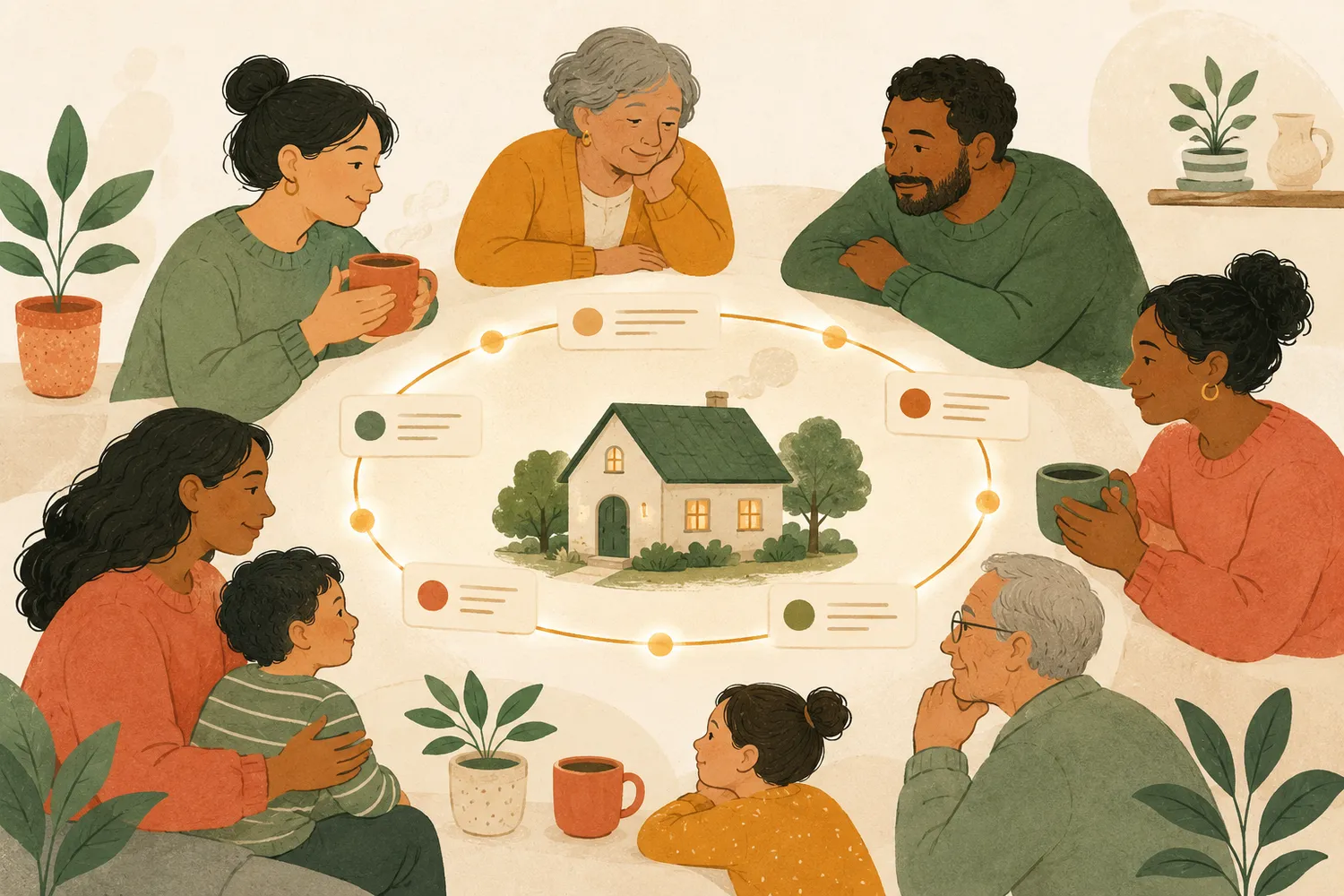
If you're reading this, something has probably shifted. A fall. A diagnosis. A phone call where Mom sounded a little off. Suddenly you and your family are coordinating care for an aging parent — and you're discovering that the group text you've all been using was never built for it.
This guide walks through how to coordinate care calmly and fairly, so the work is shared, the details are remembered, and one person doesn't quietly end up carrying everything.
1. Get the whole circle in one place
The first mistake most families make is letting care coordination live in scattered places: a group chat for some things, phone calls for others, a sibling's memory for the rest. Decisions get buried, and no one can answer a simple question like "who's driving Dad on Thursday?" a week later.
Start by naming your care circle — everyone who helps. That usually includes siblings, a spouse, sometimes a remote relative, and possibly a paid aide or neighbor. Then pick one shared place where the record lives, so every update is visible to everyone who needs it.
A good rule: if a piece of care information only exists in one person's head or one person's phone, it doesn't really exist for the family. The goal is a shared, durable record.
2. Make check-ins consistent
When everyone "checks in" differently — one sibling writes paragraphs, another sends a thumbs-up — you can't actually tell how your parent is doing over time. The fix is structure: the same small set of questions every time. (We turned this into a ready-to-use check-in checklist.)
A useful check-in captures the basics in under a minute:
- Did contact happen? (call, video, or in person)
- Mood and general state
- Did they eat / stay hydrated?
- Were medications taken as expected?
- Anything that needs follow-up?
Consistency is what turns individual updates into a picture you can trust. It also removes the blank-page paralysis that stops people from checking in at all. (We go deeper in How Foveia works.)
3. Give every concern an owner and a due date

"I'll handle it" is where things fall apart. It feels like a decision, but it leaves no record of who, what, or by when. A week later, no one's sure if the stair rail got fixed or the prescription got refilled.
Treat each concern like a small, trackable item:
- What it is and how urgent (a loose stair rail is different from a missing remote)
- Who owns it — one named person, not "someone"
- When it's due, and its status (open, watching, resolved)
This single habit prevents most dropped balls. A concern isn't resolved because someone said so in a text — it's resolved when the record says so.
4. Share the load on purpose
Left to default, care work flows to whoever lives closest. That person burns out, and remote family feels shut out even though they want to help. Make the distribution deliberate and visible:
- Let remote relatives own things that don't require presence — scheduling, insurance calls, ordering supplies, being the "research person."
- Rotate the visible jobs (rides, refills) so they don't always land on one person.
- Make the load legible. When everyone can see how much is happening, it's much harder for it to silently pile on one sibling.
If sibling tension is already showing up, we wrote a focused guide on splitting caregiving between siblings.
5. Set boundaries for helpers

As your circle grows to include a paid aide or a helpful neighbor, you'll want them to contribute without handing over the family's entire private history. The answer is roles: helpers should be able to log a visit and add notes within a scoped view, while private family notes and documents stay with the family. Clear roles are what make it safe to accept help — the same idea behind choosing in-home help. (See how we approach this on our security & privacy page.)
6. Keep documents where they already live
Resist the urge to turn your care log into a document graveyard. Instead of uploading copies of everything, just link to where documents already live — the shared Drive folder, the pharmacy portal, the appointment instructions. (More on this in organizing important documents.) One link, one label, always current. No "which version is this?"
Frequently asked
How do I start coordinating care for an aging parent?
Begin by naming your care circle — everyone who helps, including siblings, a spouse, a remote relative, and any paid aide or neighbor. Then pick one shared place where the record lives, so every update is visible to everyone who needs it, instead of scattered across texts, calls, and memory.
How do I stop one sibling from carrying everything?
Distribute the work on purpose rather than letting it default to whoever lives closest. Give remote relatives jobs that don't need presence (scheduling, insurance calls, ordering supplies), rotate the visible tasks like rides and refills, and keep the load legible so everyone can see how much is actually happening.
How do I keep track of who is doing what?
Treat each concern as a small, trackable item with three things: what it is and how urgent, one named owner, and a due date with a status (open, watching, resolved). A concern counts as resolved when the record says so, not when someone said "I'll handle it" in a text.
How do I let a paid aide help without sharing everything?
Use roles to scope what helpers can see. An aide or neighbor should be able to log a visit and add notes within a limited view, while private family notes and documents stay with the family. Clear roles are what make it safe to accept outside help.
Putting it together
Good care coordination isn't about more effort — most families already have plenty of love and effort. It's about a shared, trustworthy record of what happened and what needs attention next. Get that right and the calls stop repeating, the handoffs stop dropping, and the weight stops landing on one person.
That's exactly what we built Foveia to do — and you can start a care circle for your family in an afternoon.
Free: the aging-parent check-in checklist
The exact questions to ask every time — remote and in-person — as a clean one-page PDF you can print or share with the whole family.
Keep reading
10 signs your aging parent may need more help at home
Subtle changes are easy to miss between visits. Ten everyday signs that an aging parent may need more help at home, and how to track them as a family.
Preventing falls at home: a room-by-room safety checklist
Falls are the leading home risk for older adults — and most are preventable. A practical, room-by-room checklist for making an aging parent's home safer.
Aging in place vs. assisted living: how to decide as a family
Should your parent stay home or move to assisted living? A clear, family-first framework for weighing safety, cost, care, and connection.