How to talk to an aging parent about giving up driving
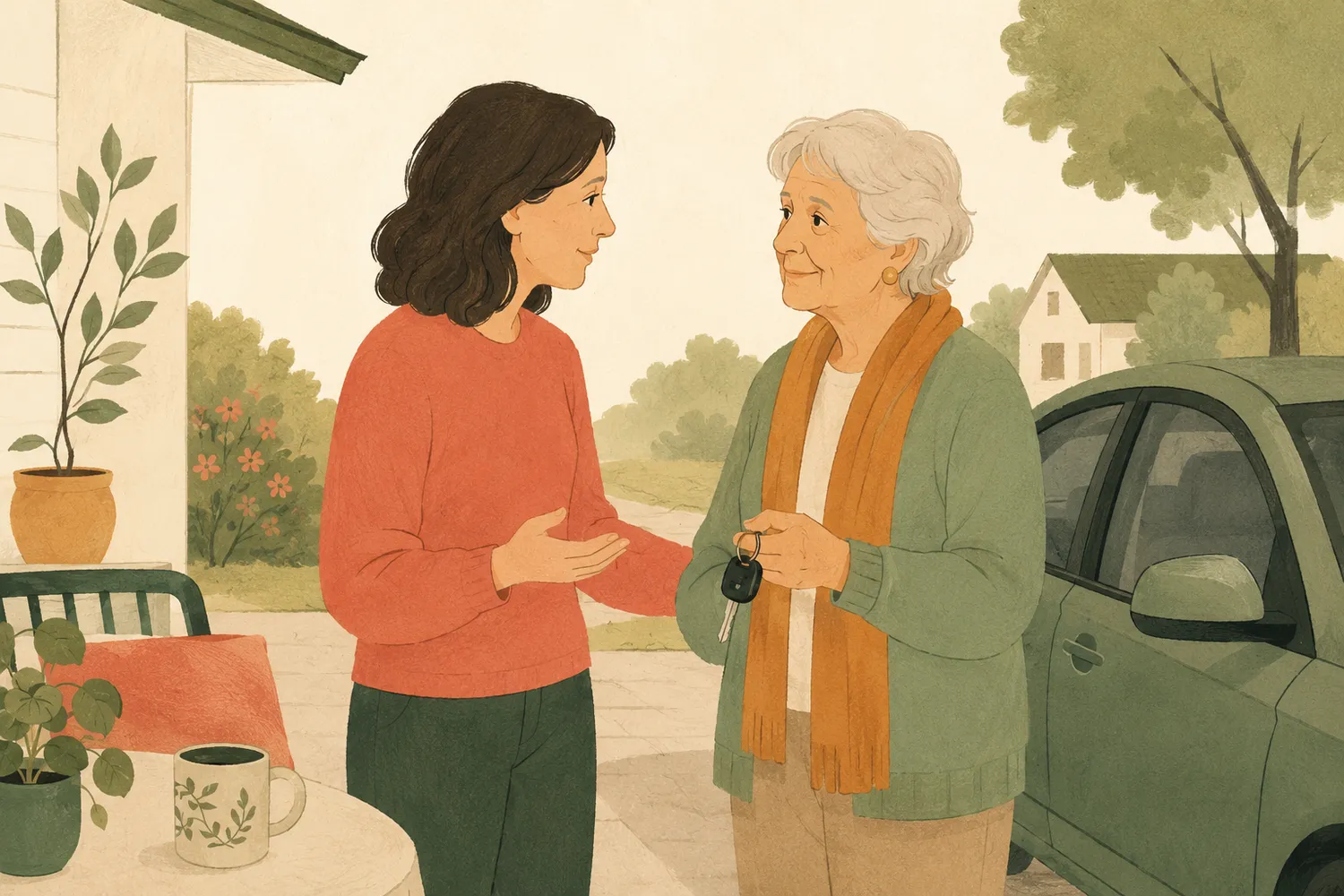
For most older adults, driving isn't just transportation — it's independence, identity, and dignity. That's why "maybe it's time to stop driving" is one of the hardest things a family ever says. Handled badly, it causes lasting resentment. Handled well, it keeps everyone safe while protecting your parent's pride.
Driving safety can involve vision, cognition, and medication effects — get a professional assessment (doctor, occupational therapist, or your local licensing authority) rather than relying on family judgment alone. This guide is about the conversation, not a clinical evaluation.
Watch for the warning signs
Note specific incidents, not vague worry:
- New dents or scrapes on the car or garage
- Getting lost on familiar routes
- Slow reactions, drifting lanes, confusing the pedals
- Tickets or near-misses
- Other drivers honking, or friends declining to ride along
Approach it with respect
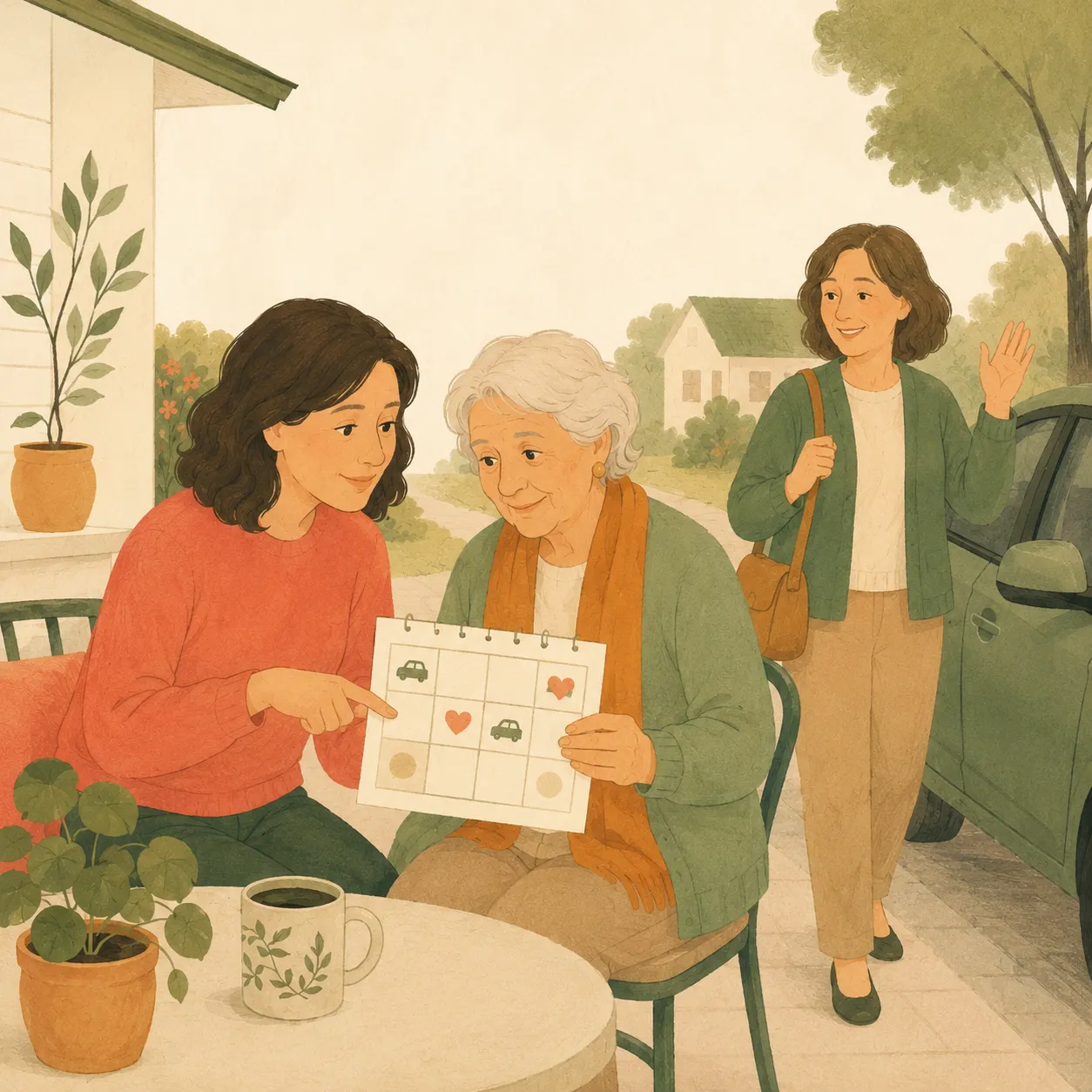
- Start early and gently — raise it as "let's keep an eye on this together," long before it's a crisis.
- Lead with care, not control — "I love you and I'd never forgive myself if something happened" lands better than "you're not safe."
- Be specific — talk about the concrete incidents you noticed, calmly, not a verdict on their competence.
- Make it a process — a daytime-only or local-only step can come before stopping entirely.
- Let an authority carry the weight — "the doctor wants you to get a driving assessment" takes the decision off your shoulders and theirs.
Protect their mobility (this is the real key)
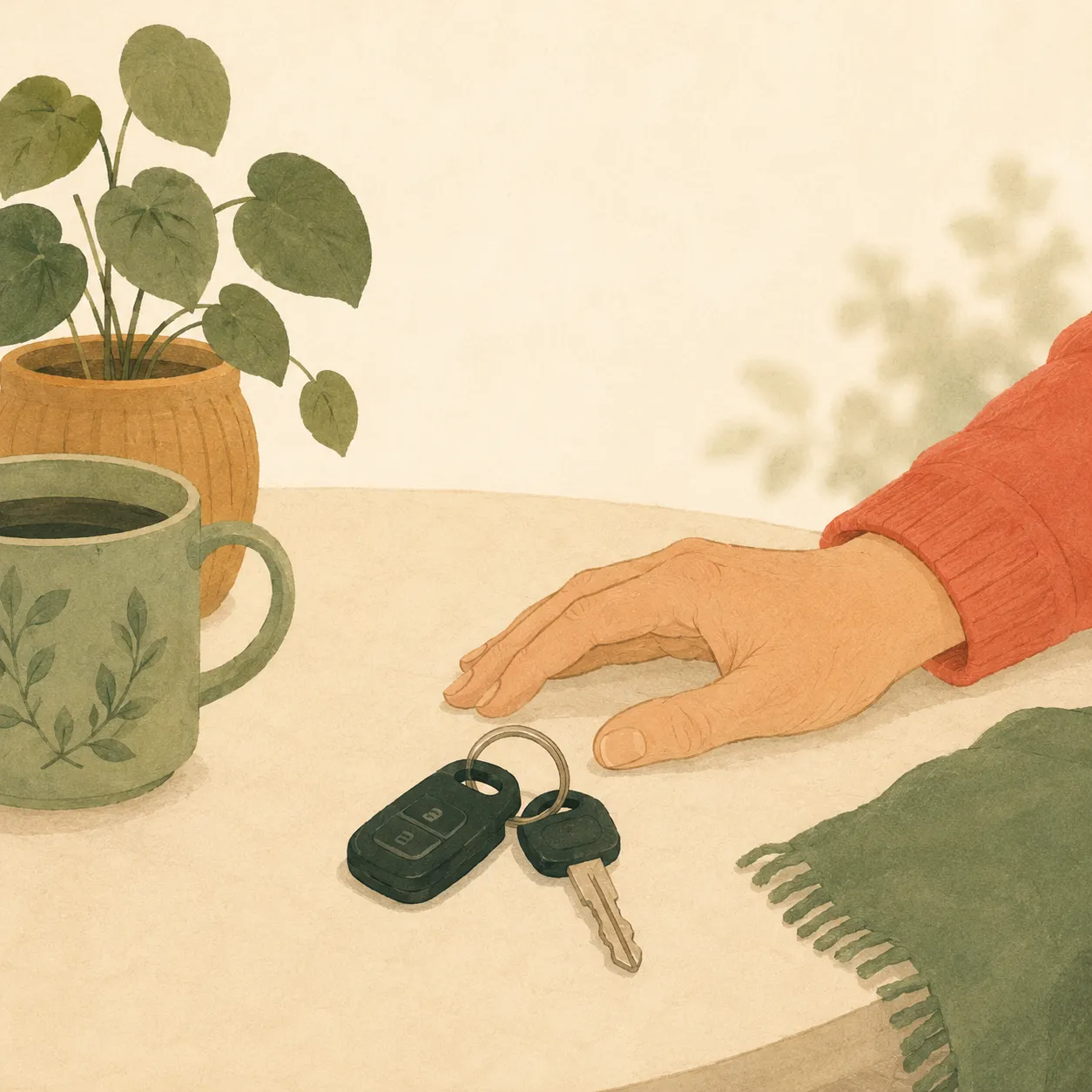
A parent fights losing the keys because they fear losing their freedom. Take that fear off the table by lining up alternatives before the conversation: family/neighbor rides, senior transport services, rideshare set up on their phone, grocery and pharmacy delivery. "You'll be stuck at home" is the fear; a concrete ride plan is the answer. Losing the keys can also quietly shrink a parent's social world, which carries its own health risks — another reason a reliable ride plan matters.
That's where coordination matters — rides are exactly the kind of recurring need a family should share rather than dump on the nearest sibling. Give each ride an owner so the alternative to driving is actually reliable. (More in splitting caregiving between siblings and how to talk to parents about accepting help.)
Foveia makes those ride hand-offs clear — every appointment with an owner, visible to everyone — so giving up the keys doesn't mean giving up a full life. Start a care circle.
Free: the aging-parent check-in checklist
The exact questions to ask every time — remote and in-person — as a clean one-page PDF you can print or share with the whole family.
Keep reading
How to talk to your aging parents about accepting help
The talk about getting more help is one of the hardest a family has. How to approach it with respect, lower the resistance, and keep your parent in control.
Important documents checklist for aging parents
Use this important-documents checklist for aging parents to organize medical, legal, financial, household, emergency, and digital-access records.
What to write down after visiting an aging parent
A practical post-visit note template for adult children: what changed, what looked normal, what needs follow-up, and who owns the next step.