Loneliness in Older Adults: The Evidence, and What Families Can Do
This article is general information, not medical advice. Consult a qualified professional about your situation.
Foveia is not a medical device and does not diagnose, treat, or monitor health conditions.
Families usually notice social disconnection in small, ordinary ways. A parent stops going to a weekly lunch after a friend dies. Phone calls get shorter. Mail piles up because leaving the house feels like too much. A once-sociable person says they're "fine," even as their week has gone very quiet.
It's worth taking those changes seriously. In older adults, social isolation and loneliness aren't just unpleasant feelings; they're associated with higher risks of earlier death, heart disease, stroke, cognitive decline, depression, anxiety, functional decline, and dementia [1], [2]. In 2025, the World Health Organization elevated social connection to a global public health priority, calling isolation and loneliness widespread and consequential across countries and age groups [3].
That isn't cause to panic. The evidence is strongest for associations, and most studies can't prove loneliness directly caused a later health problem — illness can also cause people to withdraw. But the pattern is consistent enough that connection belongs in the same family-care conversation as medications, transportation, meals, fall risk, sleep, and appointments.
If you'd rather start with what helps, skip to what families can do. Otherwise, here's what the research actually says.
Two different things: isolation and loneliness
Researchers separate two related ideas.
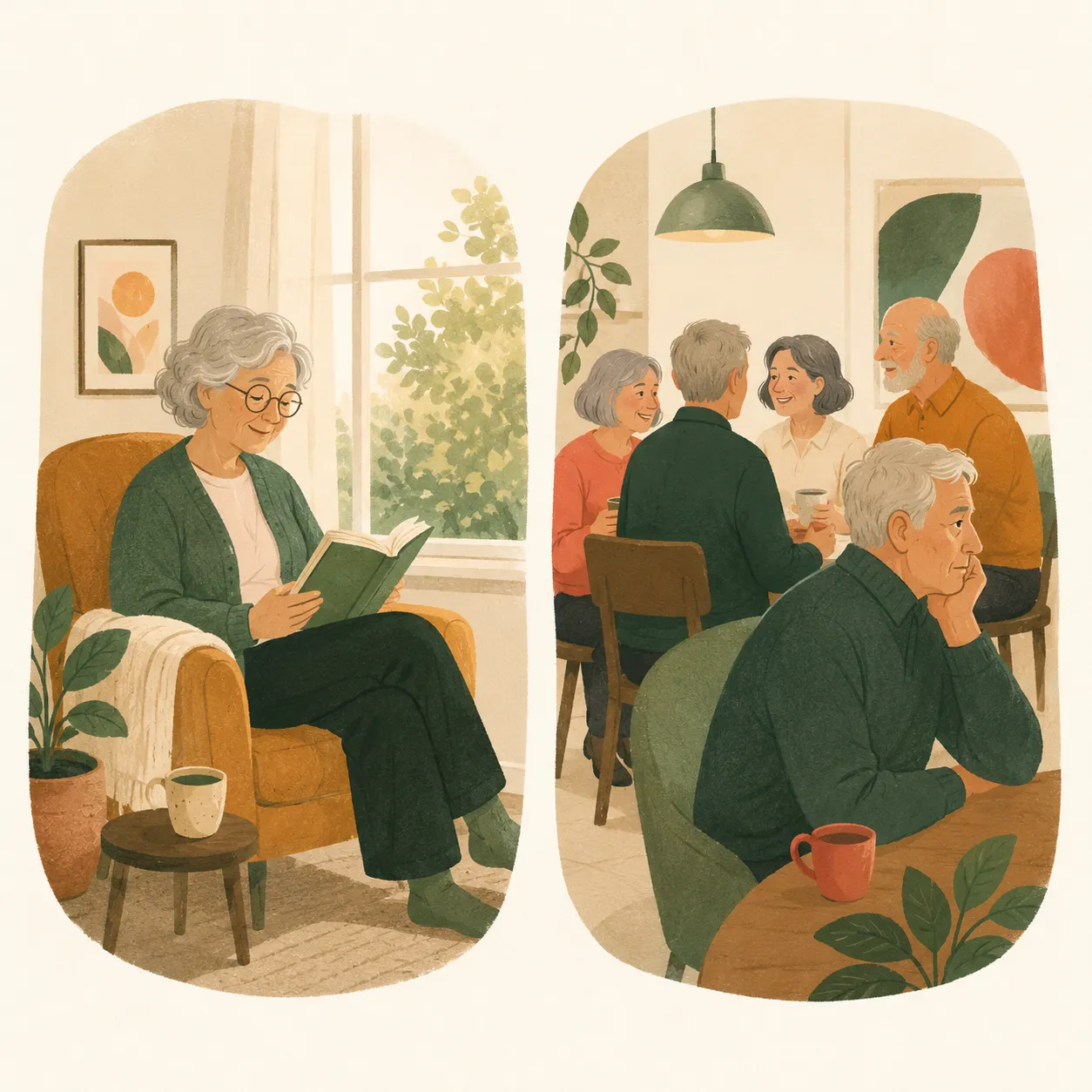
Social isolation is objective: having few relationships, infrequent contact, or limited participation in social life. Someone may see or speak with very few people in a typical week [1], [2].
Loneliness is subjective: the distressing sense that one's relationships aren't as close, frequent, or meaningful as wanted [1], [2]. A person can live alone and feel content. Another can be surrounded by relatives or facility staff and still feel profoundly lonely.
The distinction matters for families. Living alone is a risk marker, not a diagnosis. A widowed parent who lives alone but attends church, plays cards with neighbors, and talks daily with a sibling may not be lonely at all. A parent living with family may be deeply lonely if conversations are rushed, conflict is high, or they no longer feel useful. The National Academies' 2020 consensus report and the CDC both stress the same point: isolation can raise risk even without felt loneliness, and loneliness can occur even when people are around [1], [2].
The practical lesson is simple: ask, observe, and don't assume. Count contacts, but also ask about their quality. Adding visits without warmth, purpose, or continuity may not touch the problem a parent is actually having.
How common it is
Estimates vary because studies use different definitions and tools — one reason to read prevalence numbers loosely. But the sources point the same way: disconnection is common in later life.
The National Academies report estimated that about a quarter of community-dwelling Americans 65 and older were socially isolated [1]. A nationally representative analysis put that figure at 24% in 2011 — roughly 7.7 million people [4]. More recent polling suggests little has changed: in 2024, the University of Michigan National Poll on Healthy Aging (supported by AARP and Michigan Medicine) found that 33% of adults aged 50 to 80 felt lonely some or often in the past year, and 29% felt isolated [5]. Rates were far higher among people in fair or poor health, those with disabilities, and the unemployed [5].
Living arrangements are part of the picture, but a smaller part than people assume. Pew Research Center reports that 26% of U.S. adults 65 and older lived alone in 2023 — actually down from 29% in 1990, even as a record share now live with a spouse [6]. So living alone is neither rising nor the same as loneliness. It can, though, make spontaneous contact and practical support harder to come by, especially alongside bereavement, mobility limits, low income, sensory loss, or transportation barriers.
Risk tends to climb during transitions: retirement, the death of a spouse or close friend, a move, giving up driving, hearing or vision loss, new caregiving duties, depression, or disability [1], [2]. Families often notice the result as a shrinking radius — fewer outings, fewer calls, fewer reasons to get dressed, fewer people who'd notice if something changed.
What the health evidence shows
The throughline across hundreds of studies: weaker social connection tracks with worse health. How large the risk is depends on the population and how connection was measured.
On mortality, the evidence is strongest. A landmark 2010 meta-analysis of 148 studies and more than 300,000 people found that those with stronger social relationships had a 50% greater likelihood of surviving the study periods [7]. A later meta-analysis focused on loneliness, isolation, and living alone specifically, and found each independently associated with higher mortality (odds ratios of roughly 1.26 to 1.32) [8].
Beyond mortality, the associations summarized by the National Academies include roughly a 29% higher risk of coronary heart disease and a 32% higher risk of stroke among people with poor social relationships [1], [9], and about a 50% higher risk of dementia among socially isolated older adults [1], [10]. Loneliness has also been tied to functional decline: in a study of adults over 60, it predicted trouble with daily activities, difficulty with stairs and upper-body tasks, and death over follow-up — independent of simply living alone [11].
Two cautions about those numbers. First, they are relative increases over a baseline, not absolute risks; a "50% higher" risk on a small baseline is still a modest change in absolute terms. Second, they come from different studies measuring different outcomes, so they can't be added together into one cumulative figure. The honest summary is that the risks are real, consistent, and meaningful — not that loneliness is a death sentence.
Mental health and connection are especially intertwined. The CDC links isolation and loneliness with depression, anxiety, self-harm, and suicide [2]. But loneliness isn't the same as depression, and sadness after a loss can be ordinary grief. Persistent withdrawal, hopelessness, big changes in sleep or appetite, new confusion, unsafe self-neglect, or any mention of self-harm should prompt professional help.
How disconnection affects the body
There's probably no single mechanism — more likely several overlapping ones, biological and practical.
Chronic loneliness can act like a low-grade stressor, with downstream effects on sleep, blood pressure, immune function, and inflammation [1], [2]. It also tends to reshape behavior: someone who feels disconnected may move less, eat less regularly, drink more, skip medications or appointments, and drop the activities that once gave the day its shape.
Isolation also removes safeguards. A connected older adult usually has someone who notices new confusion, an unsteady walk, an empty fridge, or unpaid bills. An isolated one can have the same change go unseen until it becomes a crisis.
And connection supports identity. Older adults aren't only patients or care recipients; they're parents, neighbors, mentors, volunteers, and friends. When illness or loss strips those roles away, the harm is partly emotional and partly practical. This is why more contact isn't automatically the fix. A rushed daily check-in helps with safety but may do nothing for belonging. The better question is what kind of connection helps this particular person feel seen, useful, and included.
What families can do
The evidence on what fixes loneliness is thinner than the evidence on its risks. Reviews find promising approaches but also small studies, short follow-up, and inconsistent measures — no single program works for everyone [1], [12]. Still, several principles are well-supported enough to act on.
First, ask directly, without stigma. Many older adults won't volunteer that they're lonely, especially if they fear becoming a burden. Concrete questions land better than the word itself: "Which days feel longest?" "Who do you look forward to talking to?" "Do you ever feel left out?" The functional-decline study above measured loneliness with exactly these kinds of questions — feeling left out, isolated, lacking companionship — which are easier to answer honestly [11].
Second, map the week. Write down who the person sees or talks to, how often, and how meaningful it feels — family, neighbors, friends, faith communities, senior centers, clinicians, meal volunteers, online contacts. The point isn't surveillance; it's seeing where the week has gone thin.
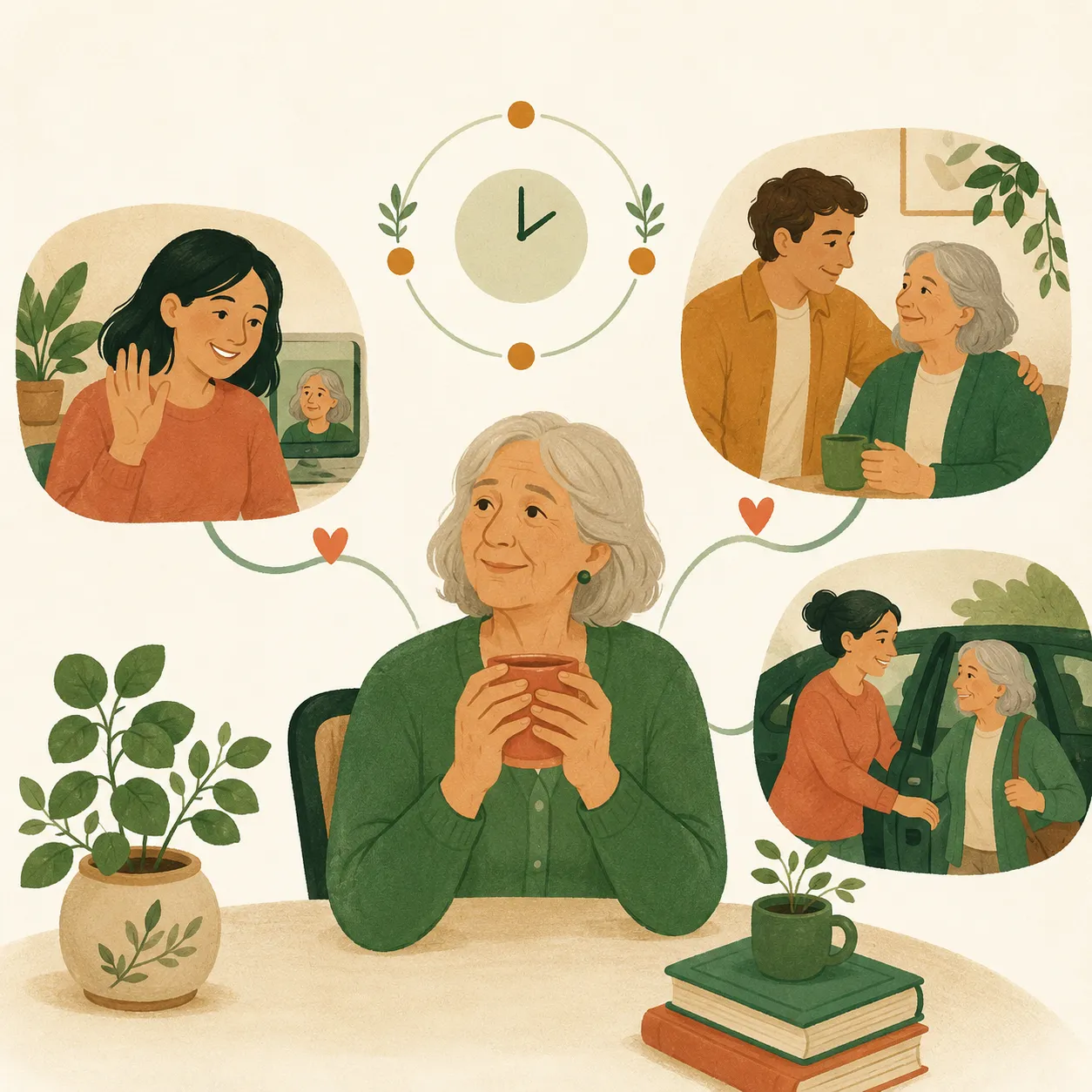
Third, make connection reliable. Steady rhythm beats random bursts of attention. One sibling calls Mondays and Thursdays, a grandchild video-calls Sundays, a neighbor checks in after grocery delivery, a cousin handles the monthly lunch ride. A shared schedule like this also lifts the emotional labor off the older adult, who otherwise has to keep asking for contact.
Fourth, prioritize meaning over generic socializing. Programs tend to work better when they involve active participation, target a specific group, and fit the person's life [12], [13]. So ask what they actually value. A former teacher might tutor; a retired nurse might volunteer; a lifelong introvert may want one trusted walking partner, not a crowded senior-center event.
Fifth, remove barriers before assuming disinterest. Hearing loss makes restaurants exhausting. Vision problems make cards and texting hard. Arthritis or fear of falling can make a person decline invitations they'd otherwise accept. A confusing phone or missing broadband can turn video calls into frustration. The National Academies report notes that hearing, vision, and mobility barriers all make connection harder [1] — so fixing them is itself a social intervention.
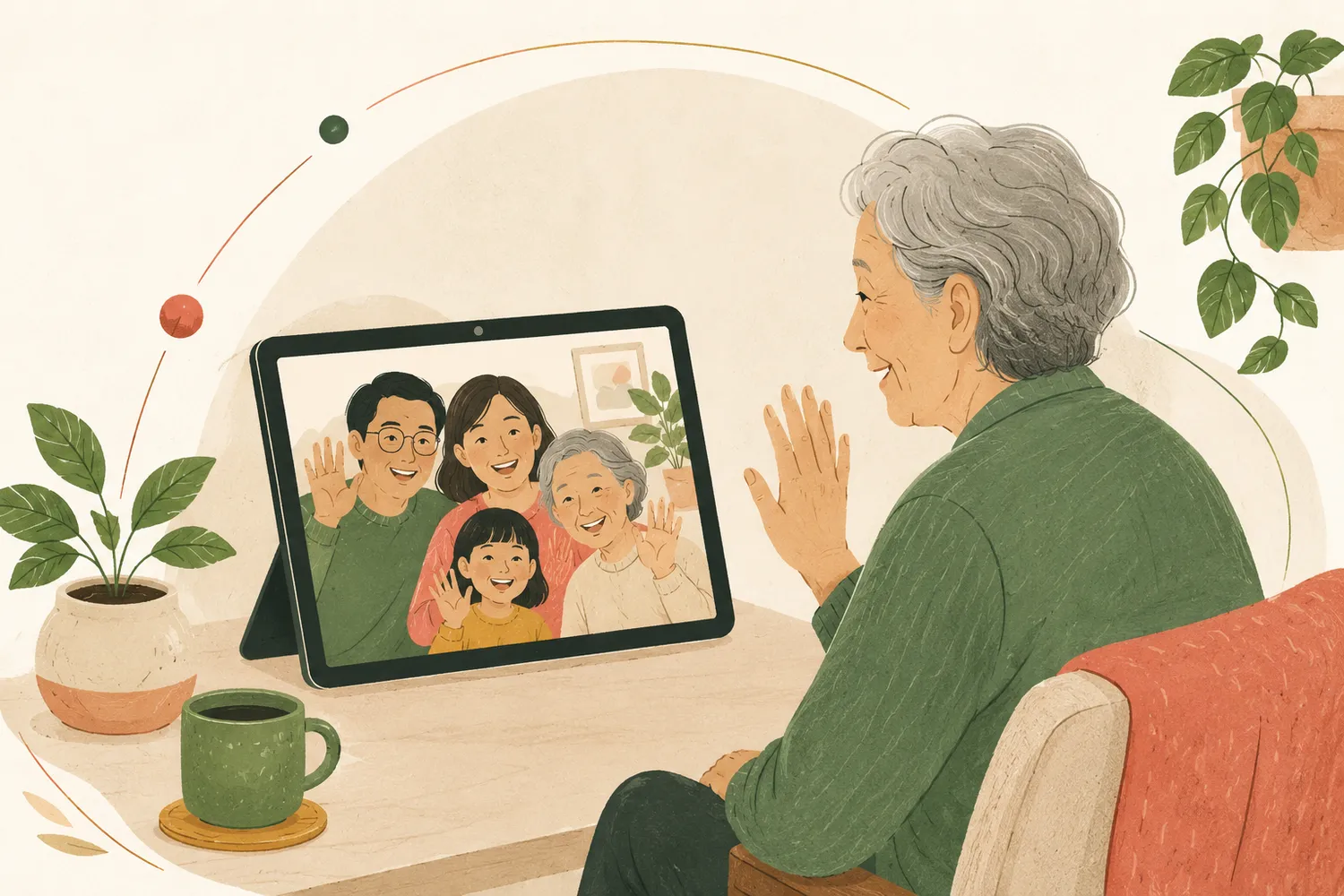
Sixth, use technology as a bridge, not a substitute. Phone and video calls, shared photo albums, family group chats, and captioned devices help, especially across distance, and the CDC counts them among promising approaches [14]. But technology fails when it's too complicated or unsupported. Set it up, test it, simplify it, and pair it with human follow-through.
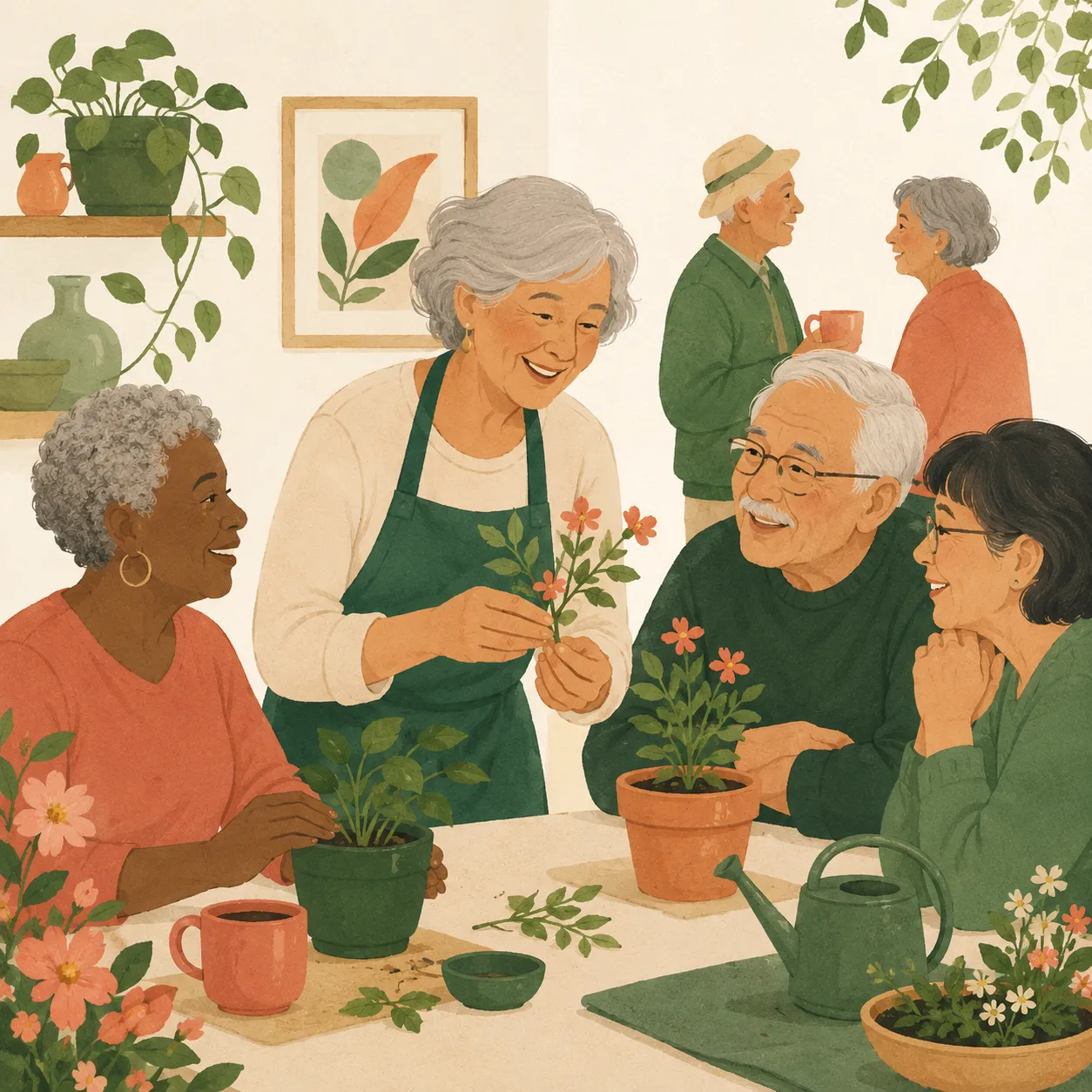
Seventh, look beyond the family. One relative can't be someone's entire social world. Depending on the person, consider senior centers, libraries, faith and veterans' groups, grief or condition-specific support groups, volunteering, intergenerational and animal-based programs, group exercise, adult day programs, and local aging-services organizations — all approaches the CDC highlights while noting we still need better evidence on what works for whom [14].
Finally, bring in professionals when loneliness shows up alongside health decline. A primary care clinician, geriatrician, social worker, audiologist, or physical or occupational therapist may find treatable contributors. New confusion, unsafe living conditions, depression symptoms, inability to manage food or medication, suspected abuse, or any self-harm concern is more than a social problem.
How to read the evidence
A few honest caveats. The risk evidence is strong for association but largely observational — researchers can't ethically assign people to years of loneliness, so causal certainty is hard, and reverse causation (poor health driving isolation) is a real possibility [7], [8], [9]. Definitions and scales also differ between studies, which is why prevalence and intervention results don't line up neatly [1], [12]. None of that means "nothing works." It means connection is personal, context matters, and a tailored plan beats any one standard activity. You don't need perfect evidence to take low-risk, respectful steps.
Key takeaways
- Isolation (limited contact) and loneliness (the felt experience of disconnection) overlap but aren't the same [1], [2].
- Disconnection is common in later life, and rises during transitions like bereavement, retirement, illness, and sensory loss [1], [2], [4], [5].
- Poor social connection is consistently linked to higher mortality, and to heart disease, stroke, dementia, depression, and functional decline — though the evidence is associational, and poor health can also cause isolation [7], [8], [9], [10], [11].
- Living alone is a risk marker, not a verdict; the share of older adults living alone is stable to declining [6].
- Families help most by making connection reliable, meaningful, and practical — regular check-ins, rides, hearing and vision support, simple technology, community ties — and by involving professionals when health or safety is at stake.
Coordinating all of that — visits, calls, rides, appointments, follow-up — is hard to hold in one person's head. A shared plan keeps it from depending on anyone's memory, which is the kind of coordination Foveia is built to support.
References
[1] National Academies of Sciences, Engineering, and Medicine. 2020. Social Isolation and Loneliness in Older Adults: Opportunities for the Health Care System. National Academies Press. https://doi.org/10.17226/25663
[2] Centers for Disease Control and Prevention. 2024. "Health Effects of Social Isolation and Loneliness." https://www.cdc.gov/social-connectedness/risk-factors/index.html
[3] World Health Organization. 2025. From Loneliness to Social Connection: Charting a Path to Healthier Societies. https://www.who.int/publications/b/79027
[4] Cudjoe TKM, Roth DL, Szanton SL, Wolff JL, Boyd CM, Thorpe RJ Jr. 2020. "The Epidemiology of Social Isolation: National Health and Aging Trends Study." The Journals of Gerontology: Series B. https://doi.org/10.1093/geronb/gby037
[5] University of Michigan Institute for Healthcare Policy and Innovation / National Poll on Healthy Aging. 2024. "Loneliness and Isolation Back to Pre-Pandemic Levels, but Still High, Among Older Adults." https://ihpi.umich.edu/news-events/news/loneliness-and-isolation-back-pre-pandemic-levels-still-high-older-adults
[6] Pew Research Center. 2025. "A Smaller Share of Older U.S. Adults Live Alone Today Than in 1990." https://www.pewresearch.org/short-reads/2025/12/04/a-smaller-share-of-older-us-adults-live-alone-today-than-in-1990/
[7] Holt-Lunstad J, Smith TB, Layton JB. 2010. "Social Relationships and Mortality Risk: A Meta-analytic Review." PLOS Medicine. https://doi.org/10.1371/journal.pmed.1000316
[8] Holt-Lunstad J, Smith TB, Baker M, Harris T, Stephenson D. 2015. "Loneliness and Social Isolation as Risk Factors for Mortality: A Meta-Analytic Review." Perspectives on Psychological Science. https://doi.org/10.1177/1745691614568352
[9] Valtorta NK, Kanaan M, Gilbody S, Ronzi S, Hanratty B. 2016. "Loneliness and Social Isolation as Risk Factors for Coronary Heart Disease and Stroke: Systematic Review and Meta-analysis of Longitudinal Observational Studies." Heart. https://doi.org/10.1136/heartjnl-2015-308790
[10] Kuiper JS, Zuidersma M, Oude Voshaar RC, Zuidema SU, van den Heuvel ER, Stolk RP, Smidt N. 2015. "Social Relationships and Risk of Dementia: A Systematic Review and Meta-analysis of Longitudinal Cohort Studies." Ageing Research Reviews. https://doi.org/10.1016/j.arr.2015.04.006
[11] Perissinotto CM, Stijacic Cenzer I, Covinsky KE. 2012. "Loneliness in Older Persons: A Predictor of Functional Decline and Death." Archives of Internal Medicine. https://doi.org/10.1001/archinternmed.2012.1993
[12] Fakoya OA, McCorry NK, Donnelly M. 2020. "Loneliness and Social Isolation Interventions for Older Adults: A Scoping Review of Reviews." BMC Public Health. https://doi.org/10.1186/s12889-020-8251-6
[13] Masi CM, Chen HY, Hawkley LC, Cacioppo JT. 2011. "A Meta-analysis of Interventions to Reduce Loneliness." Personality and Social Psychology Review. https://doi.org/10.1177/1088868310377394
[14] Centers for Disease Control and Prevention. 2024. "Promising Approaches to Promote Social Connection." https://www.cdc.gov/social-connectedness/data-research/promising-approaches/index.html
Free: the aging-parent check-in checklist
The exact questions to ask every time — remote and in-person — as a clean one-page PDF you can print or share with the whole family.
Keep reading
Family Caregiving by the Numbers: What Families Are Actually Carrying
Family caregiving is more than errands. Research shows caregivers manage ADLs, IADLs, medical tasks, finances, appointments, and constant coordination.
Care Coordination for Aging Parents: What the Research Shows
Caring for an aging parent is really a coordination problem. What research shows about shared goals, shared knowledge, and safer handoffs in care.
Caregiver Stress and Burnout: What the Research Actually Shows
A calm, evidence-based look at caregiver stress, burnout, and burden — why the scary mortality claims are incomplete, who's most at risk, and what helps.