Caregiver Stress and Burnout: What the Research Actually Shows
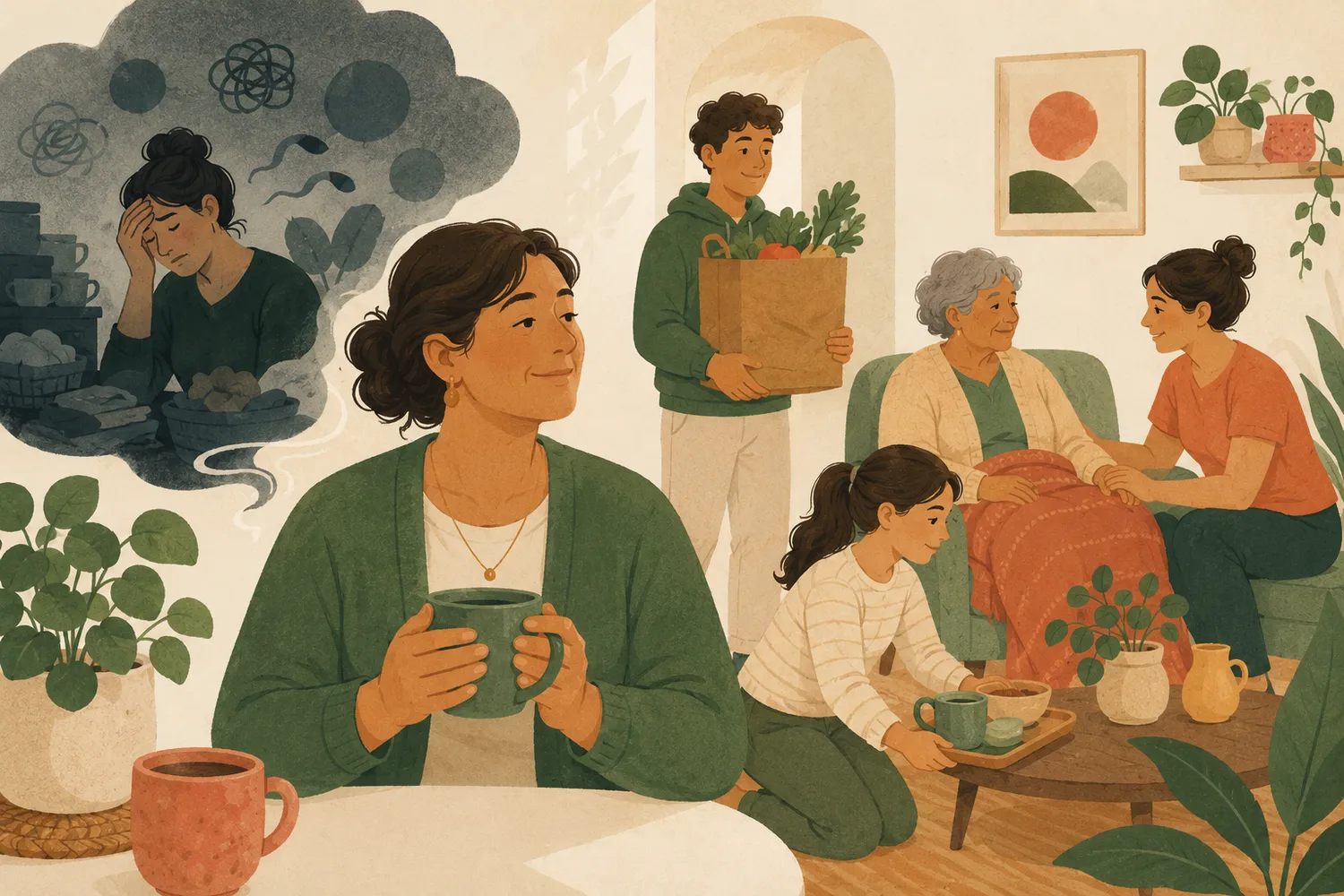
You may have heard that caregiving can shorten your life. The claim is frightening, memorable, and often repeated. It is also incomplete.
The best evidence does not show that caregiving itself is uniformly dangerous. It shows something more specific: risk rises when one person carries sustained strain, especially in dementia care, with little training, relief, choice, or backup.
That distinction matters. If the danger were simply caring, families would have little to work with. But if the danger is strain and isolation, the target becomes clearer: distribute the work, train the people doing it, protect the caregiver's own health, and build a system before crisis forces one.
This article walks through what the research does — and does not — say about caregiver stress, burnout, health risk, and support.
This article is general information, not medical advice. Consult a qualified professional about your situation.
The mortality claim needs a correction
Start with the statistic that shows up everywhere. In a landmark 1999 study, Schulz and Beach followed older spouses and found that those who were providing care and reported strain had a 63 percent higher risk of dying over four years than non-caregiving peers [1]. That figure has been repeated in headlines, advocacy materials, and caregiver articles for decades.
The part that usually gets left out changes the meaning. In the same study, spouses who were providing care but did not report strain had no elevated risk of death [1]. The finding tracked strain, not caregiving itself.
Later research made the picture even more complicated. In a reappraisal published in The Gerontologist, Roth, Fredman, and Haley reviewed five subsequent population-based studies and found a strikingly consistent pattern: caregivers, taken as a whole group, often had lower mortality than matched non-caregivers [2]. That does not mean caregiving protects every person who does it. It means population averages are heavily shaped by selection effects: healthier people are more likely to become caregivers and to remain in the role. Some earlier studies also compared highly strained caregivers against unusually healthy, socially active comparison groups, which made the apparent harm look larger than it was [2].
The honest synthesis is more precise than the scare statistic. Across caregivers as a whole, caregiving status alone does not reliably predict higher mortality. The risk signal is sharper among caregivers under sustained strain, especially when the role is intense, isolated, long-lasting, and hard to escape. Dementia spousal care is the classic high-risk case [1][3][4].
The danger is not love. The danger is one person becoming the fallback for everything.
What families are actually carrying
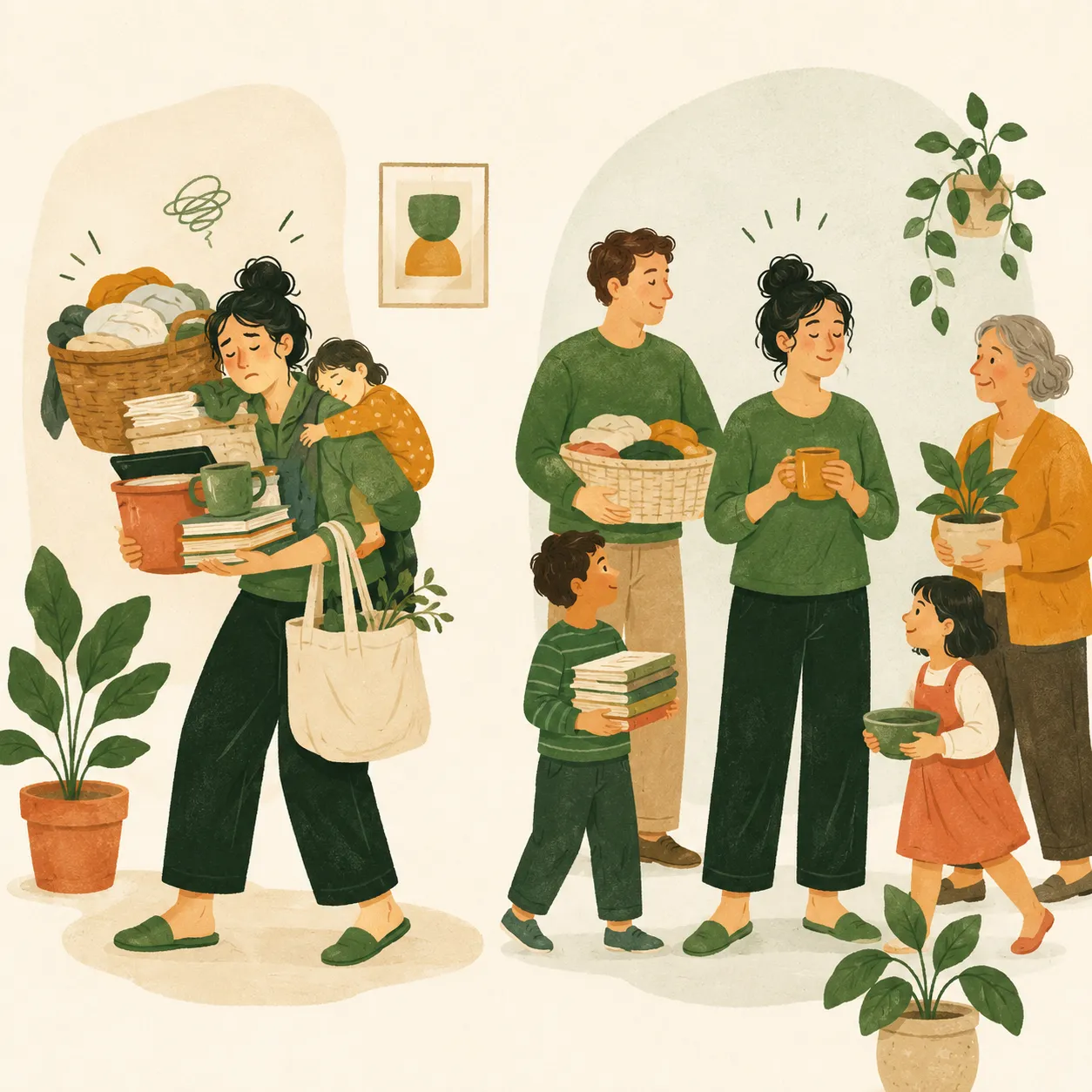
Family caregiving is no longer just "checking in." In its 2025 national report, AARP and the National Alliance for Caregiving estimated that roughly 63 million U.S. adults — about one in four — had provided care to an adult or a child with a serious health condition in the past year. About 59 million were caring for an adult [5].
The work itself has become more clinical. About 65 percent of family caregivers help with at least one activity of daily living, such as bathing, dressing, feeding, or moving around the home. More than half perform complex medical or nursing tasks, such as managing equipment, giving injections, or handling wound care. Yet only about 11 percent say they received training for basic caregiving tasks, and only 22 percent received training for complex medical ones [5]. Most families are improvising inside a role that increasingly resembles home health care.
The financial and logistical load is also substantial. AARP's Valuing the Invaluable analysis estimated that family caregivers provided roughly 36 billion hours of unpaid care in 2021, worth about $600 billion. The average caregiver also paid more than $7,200 annually in out-of-pocket costs [6]. At the same time, the National Academies has warned that the U.S. population is aging while the pool of available family caregivers is shrinking [7].
That is the background pressure. The health question is what happens when this work lands heavily on one person.
When it's more than a bad week
A short temper after a sleepless night is not the warning sign. A role that is steadily eroding your sleep, mood, health care, and relationships is. Persistent depletion — not a single hard day — is what matters, and it is the thing worth catching early.
The vocabulary around this gets used loosely, so it helps to be precise. Burden is the broadest term: the practical, emotional, financial, and social weight of the role, measured for decades through tools like the Zarit Burden Interview, introduced in 1980 [8]. Stress is narrower, and it is not just a tally of hours — in the dominant research framework it rises when a situation's demands outstrip the resources a person feels they have, which is why two people doing identical tasks can experience it completely differently depending on training, money, sleep, support, and a sense of control. Burnout is the most familiar word and the least precise here: the World Health Organization's ICD-11 frames burn-out as an occupational phenomenon tied to chronic workplace stress — not a medical diagnosis, and not one built for family caregiving [9]. Caregivers use it anyway because it names the experience — exhaustion, detachment, numbness, resentment, the sense of being scraped empty — which researchers more often capture through burden, depressive symptoms, anxiety, sleep disruption, and quality of life.
What caregiving does to mind and body
On mental health, the evidence is consistent. A large meta-analysis by Pinquart and Sörensen, pooling 84 studies, found that caregivers reported moderately more depression and stress than comparable non-caregivers, along with somewhat lower self-efficacy and subjective well-being. The largest difference was for depression, and the gaps were wider among people caring for someone with dementia [3].
On physical health, the same meta-analysis found a real but smaller difference favoring non-caregivers [3]. That contrast matters: on average, the emotional signal is stronger than the physical one. Caregiving is more reliably hard on mood, stress, and well-being than it is on measured physical health.
Chronic stress can still leave biological fingerprints. In a six-year study, Kiecolt-Glaser and colleagues found that older adults caring for a spouse with dementia showed increases in the inflammatory marker IL-6 roughly four times faster than non-caregivers. The elevation persisted even years after the spouse had died [4]. Inflammation of this kind is linked to a range of age-related illnesses, which is part of why caregiving has become a public-health issue; the U.S. Centers for Disease Control and Prevention tracks caregiver health through national surveys [10].
The caveat is important, and it cuts the other way. Dementia spousal caregivers are among the most heavily strained, and they are not representative of every caregiving situation. Population averages can be reassuring — but they can also hide serious individual cases. If you are sleeping poorly, missing your own medical appointments, feeling trapped, or becoming depressed, "not the norm" is not a reason to wait.
Who is most at risk
The reassuring averages [2] do not apply evenly, and the high-risk pattern is recognizable. The risk signal sharpens under sustained strain [1], and it concentrates when the situation has several of these features:
- The person being cared for has dementia, or difficult behavioral symptoms — wandering, aggression, nighttime disruption [3][4].
- The role is intense and has lasted months or years with little relief.
- The caregiver felt they had little real choice in taking it on.
- One person is coordinating almost everything, with no backup who could step in without a long explanation.
- The caregiver is performing medical or nursing tasks they were never trained to do [5].
- The caregiver is also carrying their own health problems, job pressure, or financial strain [5][6].
- The whole arrangement is fragile: one fall, infection, or medication change can throw it into chaos.
Those are features of the arrangement. It is just as important to notice what is happening to the person. If you are the caregiver, the warning signs in yourself are more concrete: you are losing sleep, meals, exercise, or your own medical appointments; you cannot safely leave the person alone; you are pulling away from friends, work, and the things you used to do; you feel trapped, resentful, numb, or persistently low.
If several of those are true, the honest next step is not "more self-care." Self-care helps, but it is too small a frame when the problem is structural. The real target is redistributing the load — training, relief, backup helpers, shared information, and professional help where it is needed. The rest of this article is about that.
What actually helps

Support works, but usually modestly. An earlier meta-analysis by Sörensen, Pinquart, and Duberstein, pooling 78 intervention trials, found that structured programs produced small-to-moderate improvements in caregiver burden, depression, well-being, and knowledge [11]. These are real gains, not miracles. Expecting any single program to erase the difficulty sets caregivers up for disappointment.
The strongest practical pattern is that support works better when it is multicomponent and tailored rather than generic. One of the strongest dementia-caregiver examples is REACH II, a randomized controlled trial that combined education, skills training, stress-management techniques, and support across roughly a dozen sessions over six months. The intervention was customized to each caregiver's specific risk areas, and participants showed improved quality of life and lower rates of clinical depression compared with a control group [12].
More recent review evidence points in the same general direction while adding caution. A 2025 umbrella review found that caregiver interventions most consistently improved depression, especially when they used cognitive behavioral therapy or mindfulness-based approaches. Effects on burden and quality of life were more mixed, and much of the evidence still focuses on dementia caregivers rather than caregivers across all diagnoses [13]. Technology-supported interventions are increasingly common, but the details matter: a useful tool has to reduce coordination load, not become another task for the caregiver to manage [13].
The practical lesson is that the intervention should match the pressure point:
- If the problem is no relief, the priority is respite or backup coverage.
- If the problem is difficult dementia behavior, the priority is dementia-specific coaching and behavior-management skills.
- If the problem is medical tasks, the priority is training from clinicians.
- If the problem is depression, anxiety, or persistent depletion, the priority is professional mental-health support.
- If the problem is family chaos, the priority is visible coordination: tasks, medications, appointments, documents, contacts, and decisions in one shared system.
A pamphlet is rarely enough. A plan that lives only in one person's head is not a care system.
Making the load shareable
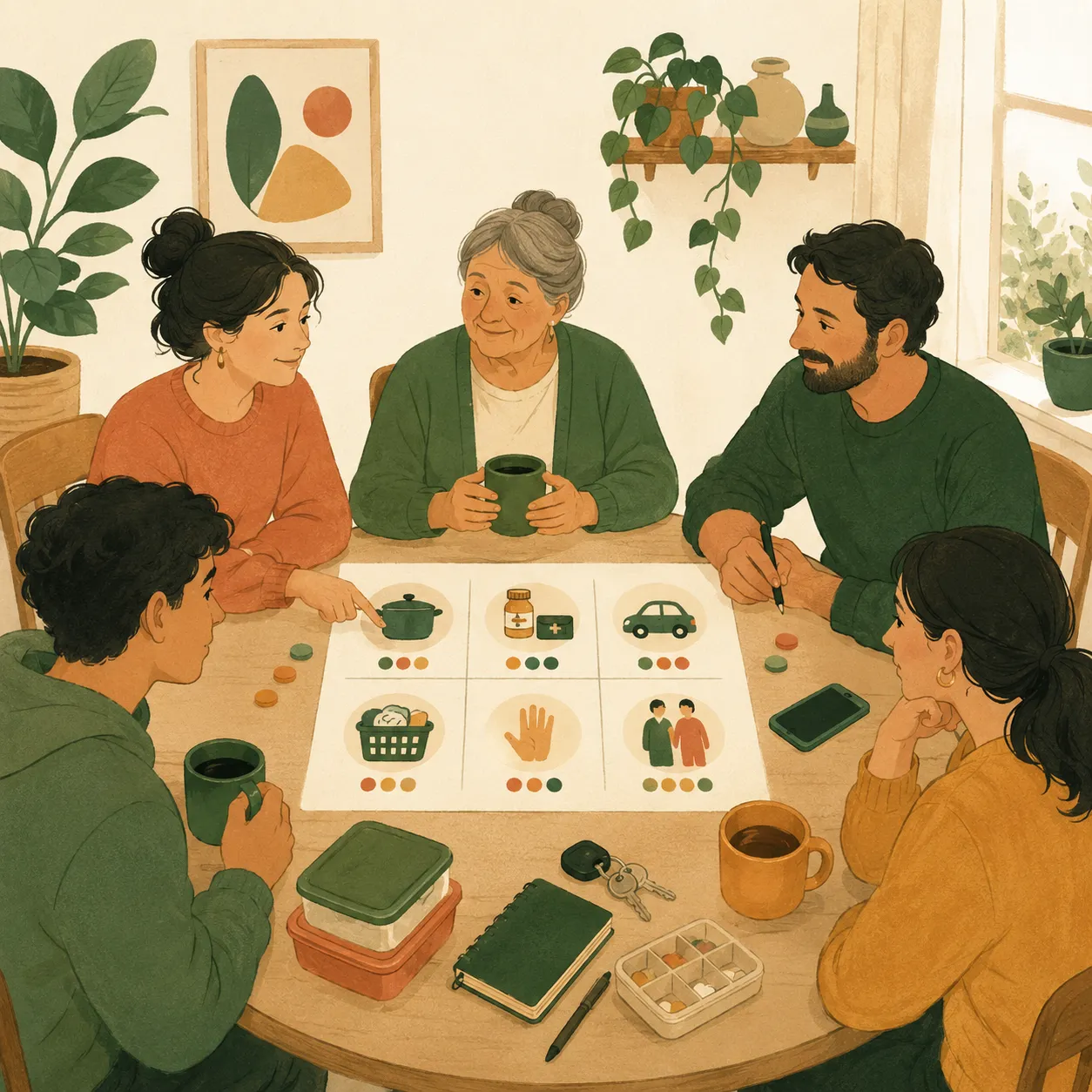
The research does not point to one perfect solution. It points to a more basic principle: reduce strain before strain becomes the caregiver's default state.
A useful first pass is to make the invisible work visible:
- Write down the current care tasks, including medications, appointments, meals, transportation, finances, paperwork, safety checks, and communication with clinicians.
- Name the primary caregiver honestly, rather than pretending the work is evenly shared.
- Name at least one secondary helper who can take specific tasks without waiting for an emergency.
- Identify tasks that require training, especially medication management, wound care, injections, transfers, or equipment use.
- Protect the caregiver's own health care by scheduling appointments before there is a crisis.
- Build relief into the calendar instead of treating respite as something that happens only after the caregiver breaks.
- Store key information somewhere more reliable than text threads, memory, or one person's notebook.
One thing that list leaves out: the person being cared for has their own social world, and loneliness and isolation carry real health weight in older adults — we cover that evidence in loneliness and social isolation in older adults.
These steps will not make caregiving easy. They can make it less isolated, less fragile, and less dependent on one exhausted person holding the entire system together.
Key takeaways
- About 63 million U.S. adults are family caregivers, and the work increasingly includes complex medical tasks most people were never trained to do [5].
- Emotional distress is common: caregivers report moderately higher depression and stress than non-caregivers, especially in dementia caregiving [3].
- The widely quoted 63 percent higher mortality risk applied specifically to older spousal caregivers who reported strain. Unstrained caregivers in the same study did not show elevated mortality [1].
- Better-matched population studies do not show that caregiving is uniformly dangerous; the serious risk concentrates in high-strain, long-duration, isolated situations [2].
- Support helps most when it is tailored and multicomponent: skills, coaching, stress management, connection, respite, and shared coordination [11][12][13].
- The danger lies in strain and isolation, not in caring itself.
The goal was never to make caregiving effortless — the evidence does not support that fantasy. It is narrower and more achievable: keep any one person from quietly becoming the whole care system. That is a structural fix, not a matter of trying harder, and it is the difference between a role someone can sustain and one that slowly empties them out.
Foveia is built for the handoff: when tasks, medical details, and responsibilities are written down and shared, a second or third person can pick up a piece without a long briefing. The work gets carried by more than one set of hands — which is the whole point of catching strain before it becomes a crisis.
References
- Schulz, R., & Beach, S. R. (1999). Caregiving as a risk factor for mortality: The Caregiver Health Effects Study. JAMA, 282(23), 2215–2219. https://doi.org/10.1001/jama.282.23.2215
- Roth, D. L., Fredman, L., & Haley, W. E. (2015). Informal caregiving and its impact on health: A reappraisal from population-based studies. The Gerontologist, 55(2), 309–319. https://doi.org/10.1093/geront/gnu177
- Pinquart, M., & Sörensen, S. (2003). Differences between caregivers and noncaregivers in psychological health and physical health: A meta-analysis. Psychology and Aging, 18(2), 250–267. https://doi.org/10.1037/0882-7974.18.2.250
- Kiecolt-Glaser, J. K., Preacher, K. J., MacCallum, R. C., Atkinson, C., Malarkey, W. B., & Glaser, R. (2003). Chronic stress and age-related increases in the proinflammatory cytokine IL-6. Proceedings of the National Academy of Sciences, 100(15), 9090–9095. https://doi.org/10.1073/pnas.1531903100
- AARP & National Alliance for Caregiving (2025). Caregiving in the U.S. 2025. Washington, DC: AARP, July 24, 2025. https://www.aarp.org/pri/topics/ltss/family-caregiving/caregiving-in-the-us-2025/ (DOI: 10.26419/ppi.00373.001)
- Reinhard, S. C., Caldera, S., Houser, A., & Choula, R. B. (2023). Valuing the Invaluable 2023 Update: Strengthening Supports for Family Caregivers. AARP Public Policy Institute. https://doi.org/10.26419/ppi.00082.006
- National Academies of Sciences, Engineering, and Medicine (2016). Families Caring for an Aging America. Washington, DC: The National Academies Press. https://doi.org/10.17226/23606
- Zarit, S. H., Reever, K. E., & Bach-Peterson, J. (1980). Relatives of the impaired elderly: Correlates of feelings of burden. The Gerontologist, 20(6), 649–655. https://doi.org/10.1093/geront/20.6.649
- World Health Organization (2019). Burn-out an occupational phenomenon: International Classification of Diseases. https://www.who.int/news/item/28-05-2019-burn-out-an-occupational-phenomenon-international-classification-of-diseases
- Centers for Disease Control and Prevention (2019). Caregiving for Family and Friends — A Public Health Issue. https://www.cdc.gov/healthy-aging-data/media/pdfs/caregiver-brief-508.pdf
- Sörensen, S., Pinquart, M., & Duberstein, P. (2002). How effective are interventions with caregivers? An updated meta-analysis. The Gerontologist, 42(3), 356–372. https://doi.org/10.1093/geront/42.3.356
- Belle, S. H., Burgio, L., Burns, R., et al., for the REACH II Investigators (2006). Enhancing the quality of life of dementia caregivers from different ethnic or racial groups: A randomized, controlled trial. Annals of Internal Medicine, 145(10), 727–738. https://doi.org/10.7326/0003-4819-145-10-200611210-00005
- McHugh, M., Munsterman, E., Cho, H., & Naylor, M. D. (2025). Effective solutions for caregivers of older adults: A review of systematic reviews. Journal of Applied Gerontology, 44(10), 1571–1583. https://doi.org/10.1177/07334648241312999
Free: the aging-parent check-in checklist
The exact questions to ask every time — remote and in-person — as a clean one-page PDF you can print or share with the whole family.
Keep reading
Loneliness in Older Adults: The Evidence, and What Families Can Do
Health risks of loneliness and social isolation in older adults, plus practical, evidence-informed steps families can take.
Family Caregiving by the Numbers: What Families Are Actually Carrying
Family caregiving is more than errands. Research shows caregivers manage ADLs, IADLs, medical tasks, finances, appointments, and constant coordination.
Care Coordination for Aging Parents: What the Research Shows
Caring for an aging parent is really a coordination problem. What research shows about shared goals, shared knowledge, and safer handoffs in care.