Long-distance caregiving: a checklist for helping from afar

Caring from a distance comes with a specific kind of helplessness. You're two time zones away, you only hear about the crises, and you suspect your local sibling is doing far more than they let on. The good news: a lot of the most valuable caregiving work doesn't require being in the room. You just need information and a clear lane.
Here's a checklist for being genuinely useful from afar.
Get visibility first
You can't help with what you can't see. Before anything else, get yourself into the loop on the day-to-day — not just the emergencies.
- Make sure there's one shared record of check-ins, concerns, and appointments that you can read anytime.
- Ask the local sibling to log routine check-ins, even the boring "all fine" ones. The boring ones are how you spot a trend.
- Set yourself up to see what's already handled, so you're not double-asking questions that stress the local caregiver.
The single kindest thing you can do for a local sibling is stop making them repeat themselves. A shared timeline means they update once, and everyone — including you — stays current.
Own the work that doesn't need presence
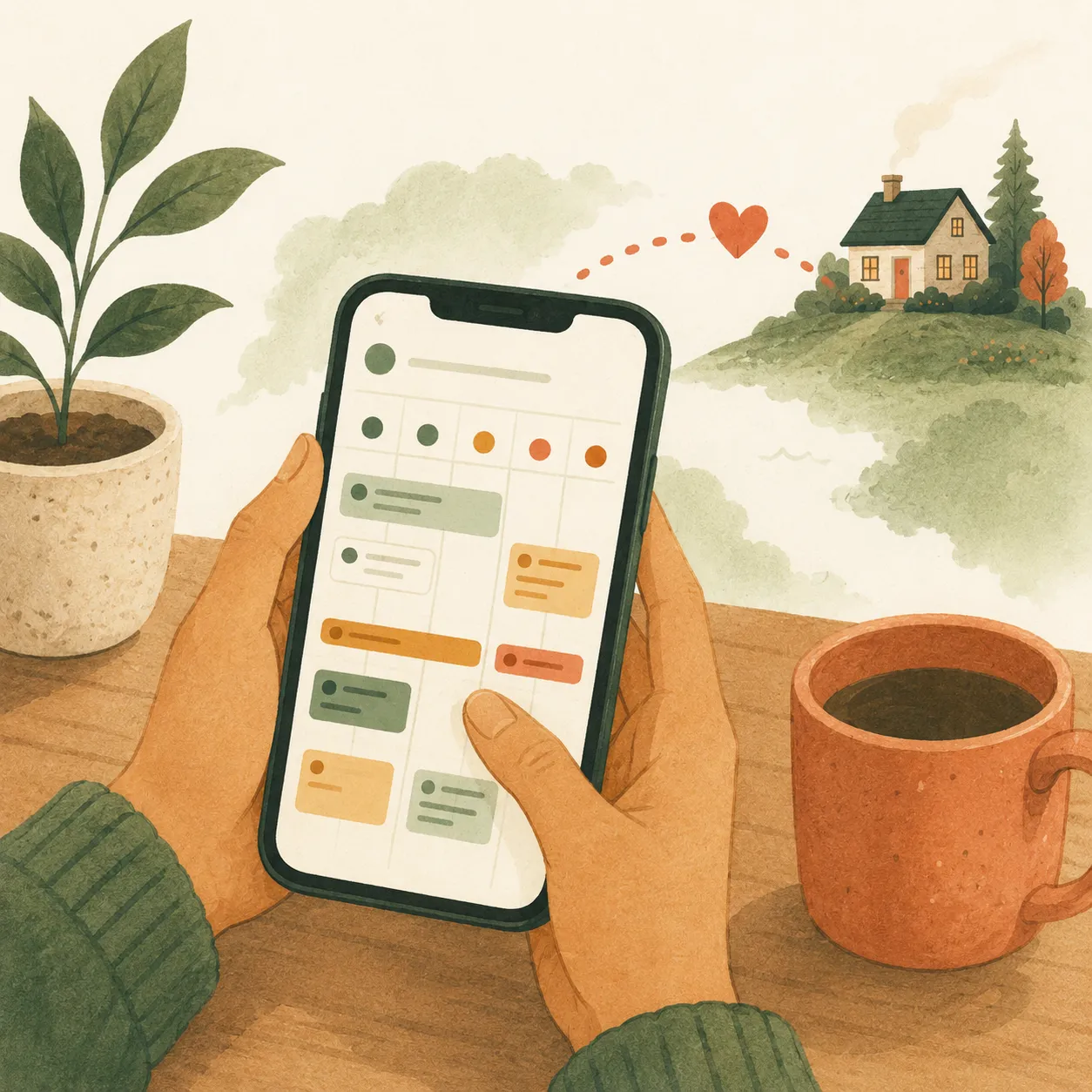
This is where remote family shines. Claim a lane and own it completely:
- Scheduling — book appointments and keep the calendar straight.
- Insurance & billing — calls, claims, statements, and the inevitable disputes.
- Supplies — keep medications, incontinence supplies, and groceries auto-ordered.
- Research — compare providers, services, and options; be the family's "research desk."
- Documents — keep the shared folder, pharmacy portal links, and instructions organized.
Owning even two or three of these takes real weight off whoever's local.
Make your visits count
When you do travel in, plan the visit around things that are hard to do remotely:
- Do a home safety pass — rails, rugs, lighting, smoke detectors.
- Handle in-person errands that have piled up (the DMV, the bank, the doctor you wanted to meet).
- Give the local caregiver an actual break — take the shift so they can leave town.
Stay coordinated between visits
- Agree on what counts as a "call me now" situation versus a "log it" situation.
- Keep your contributions on the same shared record as everyone else, so nothing lives only in your inbox.
- Check in on the caregiver, not just the parent. Burnout is the quiet emergency.
The tool problem
Most of this falls apart on group texts and memory. Long-distance caregiving needs a shared, durable record more than any other arrangement — because you literally cannot walk into the next room to ask. That's the whole reason structured, role-based coordination exists.
If you're building this from scratch, start with our guide on coordinating care for aging parents, and if sibling load is uneven, see splitting caregiving fairly.
Foveia was built with the remote relative in mind — open one timeline and you finally know how the week went. Start a care circle and get in the loop.
Free: the long-distance caregiver's checklist
What a remote sibling can actually do — a printable checklist of check-ins, document links, and tasks you can own from anywhere.
Keep reading
10 signs your aging parent may need more help at home
Subtle changes are easy to miss between visits. Ten everyday signs that an aging parent may need more help at home, and how to track them as a family.
Preventing falls at home: a room-by-room safety checklist
Falls are the leading home risk for older adults — and most are preventable. A practical, room-by-room checklist for making an aging parent's home safer.
Aging in place vs. assisted living: how to decide as a family
Should your parent stay home or move to assisted living? A clear, family-first framework for weighing safety, cost, care, and connection.