Aging in place vs. assisted living: how to decide as a family
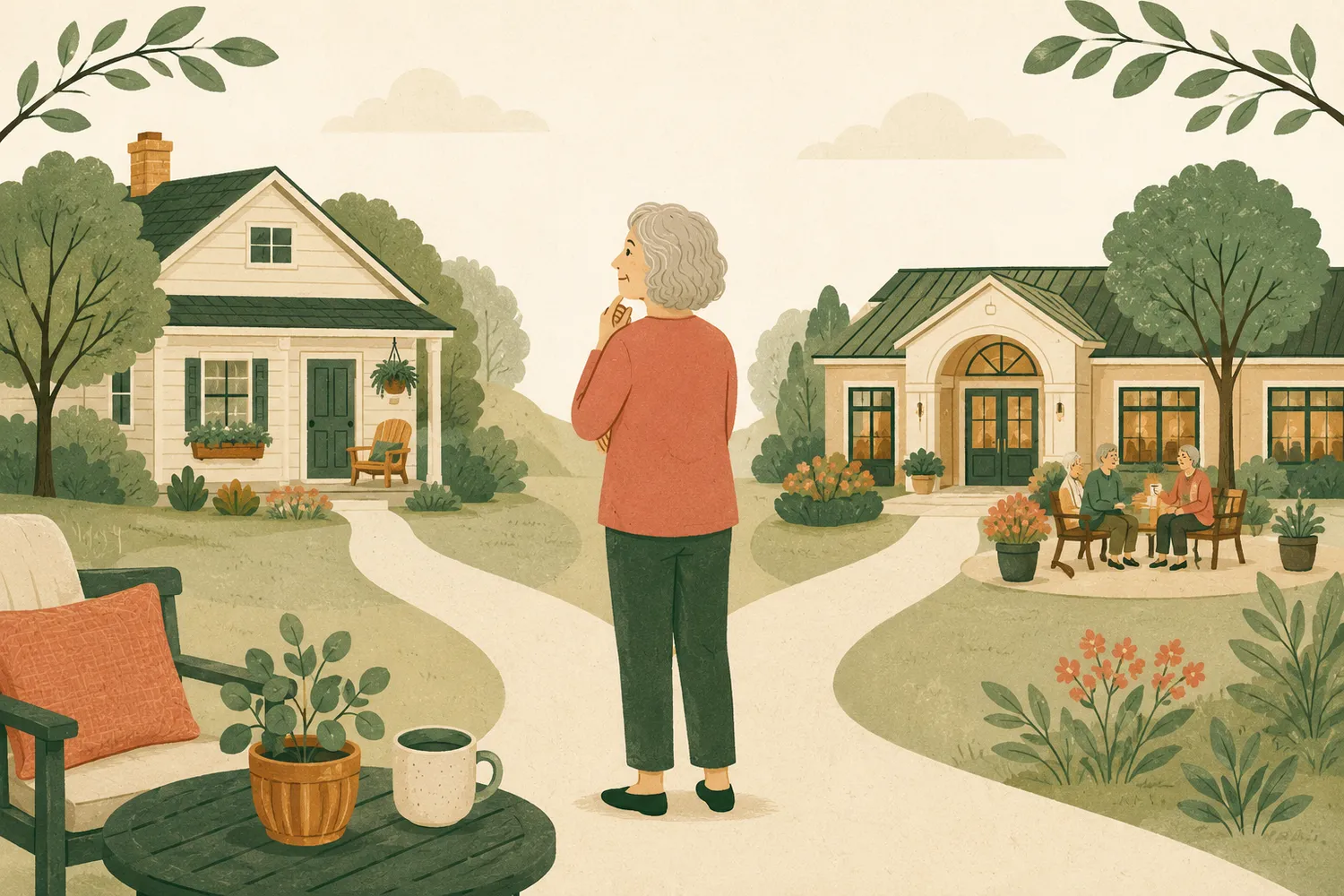
At some point many families face the big one: can Mom keep living at home, or is it time for assisted living? There's rarely a clean answer, and the decision is heavy with guilt and emotion. A simple framework helps you decide together, on the facts.
This is a decision-making guide, not medical, legal, or financial advice. Loop in your parent's doctor, a financial advisor, and (ideally) a geriatric care manager for the specifics of your situation.
Weigh it across five dimensions
Score each honestly — for your parent today, and where things are trending:
- Safety — falls, wandering, leaving the stove on, managing medications. The most common tipping point.
- Care level — how much hands-on help is needed, and whether it's available reliably at home.
- Connection — is your parent thriving at home, or increasingly isolated? Loneliness is a real health risk.
- Cost — home costs (modifications, in-home help) vs. a facility, against savings, insurance, and benefits.
- Your parent's wishes — most people want to stay home; weigh it heavily, but balance it against safety.
If most arrows point the same way, you have your answer. If they conflict, you've at least found exactly what to talk through.
Aging in place — and what makes it work
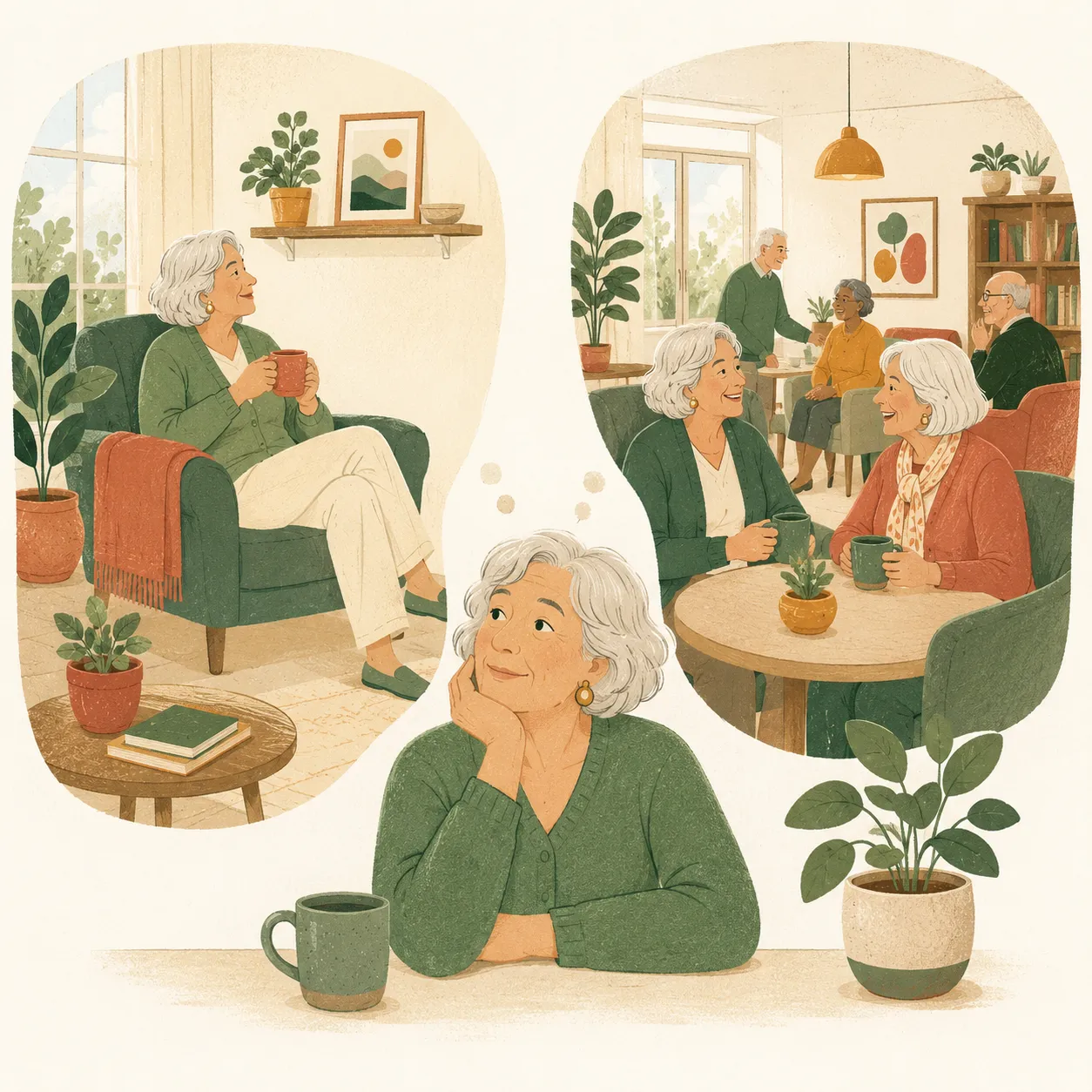
Staying home is often best if you build the scaffolding: home safety fixes, in-home help, reliable transport, and a family that's genuinely coordinating rather than improvising. Without that scaffolding, "aging in place" quietly becomes "one stretched sibling doing everything."
Assisted living — and how to evaluate it
If the care need outpaces what home can support, a good facility can mean more connection and safety, not less. Tour several, visit at different times, talk to current families, and read the contract closely. It's a coordination project of its own.
Decide together, on shared facts
This decision goes sideways when siblings are working from different pictures — the remote one imagines Mom's fine; the local one is drowning. Ground it in the actual record: the check-ins, the concerns, the pattern over months. That's the same reason a shared care log reduces sibling conflict — everyone decides from reality.
Foveia gives you that shared picture of how your parent is actually doing over time — the best input to a decision this big. Start a care circle.
Free: the aging-parent check-in checklist
The exact questions to ask every time — remote and in-person — as a clean one-page PDF you can print or share with the whole family.
Keep reading
10 signs your aging parent may need more help at home
Subtle changes are easy to miss between visits. Ten everyday signs that an aging parent may need more help at home, and how to track them as a family.
Preventing falls at home: a room-by-room safety checklist
Falls are the leading home risk for older adults — and most are preventable. A practical, room-by-room checklist for making an aging parent's home safer.
How to create a care plan for an aging parent
Use this aging parent care plan template to assign owners, organize check-ins, track documents, and keep the family care record current.