How to create a care plan for an aging parent
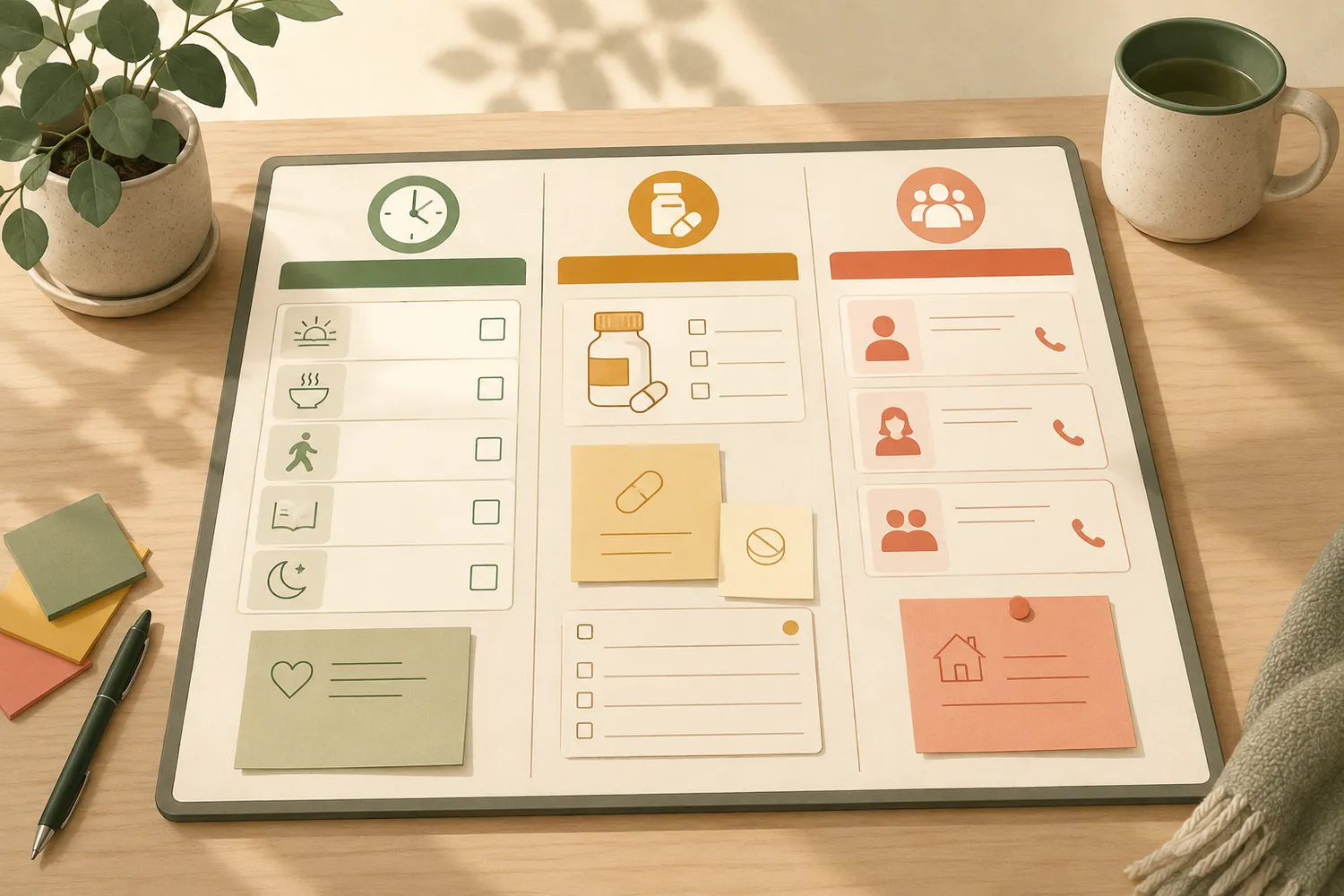
A "care plan" sounds clinical, but at its heart it's simple: a shared, written answer to who does what, when, and what we do if things change. It's the difference between a family that reacts to every crisis and one that's quietly prepared.
You don't need a professional to start one. Here's how to build a care plan your whole family can actually use.
1. Capture the current picture
Start with what is, not what should be:
- Daily routine and what your parent can do independently vs. needs help with
- Medications, providers, and key health context (in plain words)
- The home: safety, accessibility, what's working and what isn't
- Who's already helping, and with what
If you're not sure how much help is needed, these ten signs are a useful gauge.
2. Define what "good" looks like
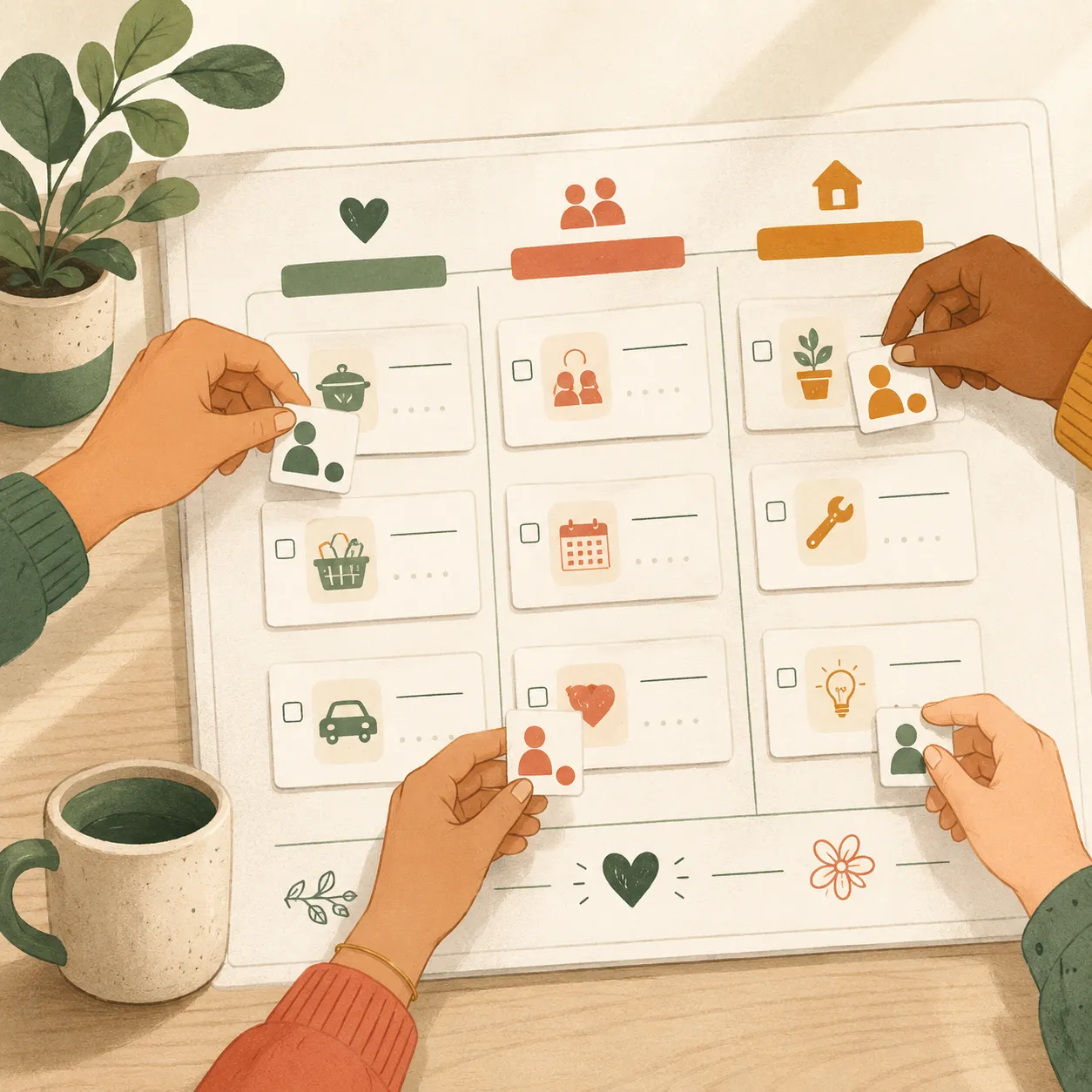
Anchor the plan in your parent's own goals — usually staying independent and at home as long as possible. Every decision gets measured against that, which keeps the plan focused on them rather than on everyone's anxieties.
3. Assign owners to the real work
This is where most plans live or die. For each recurring need, name an owner and a backup:
- Medications and refills
- Rides and appointments
- Groceries and supplies
- Bills and insurance
- Regular check-ins
A care plan with no owners is just a wish list. Every line should answer "who" — and one named person beats "we'll all pitch in" every time.
4. Plan for the "what ifs"
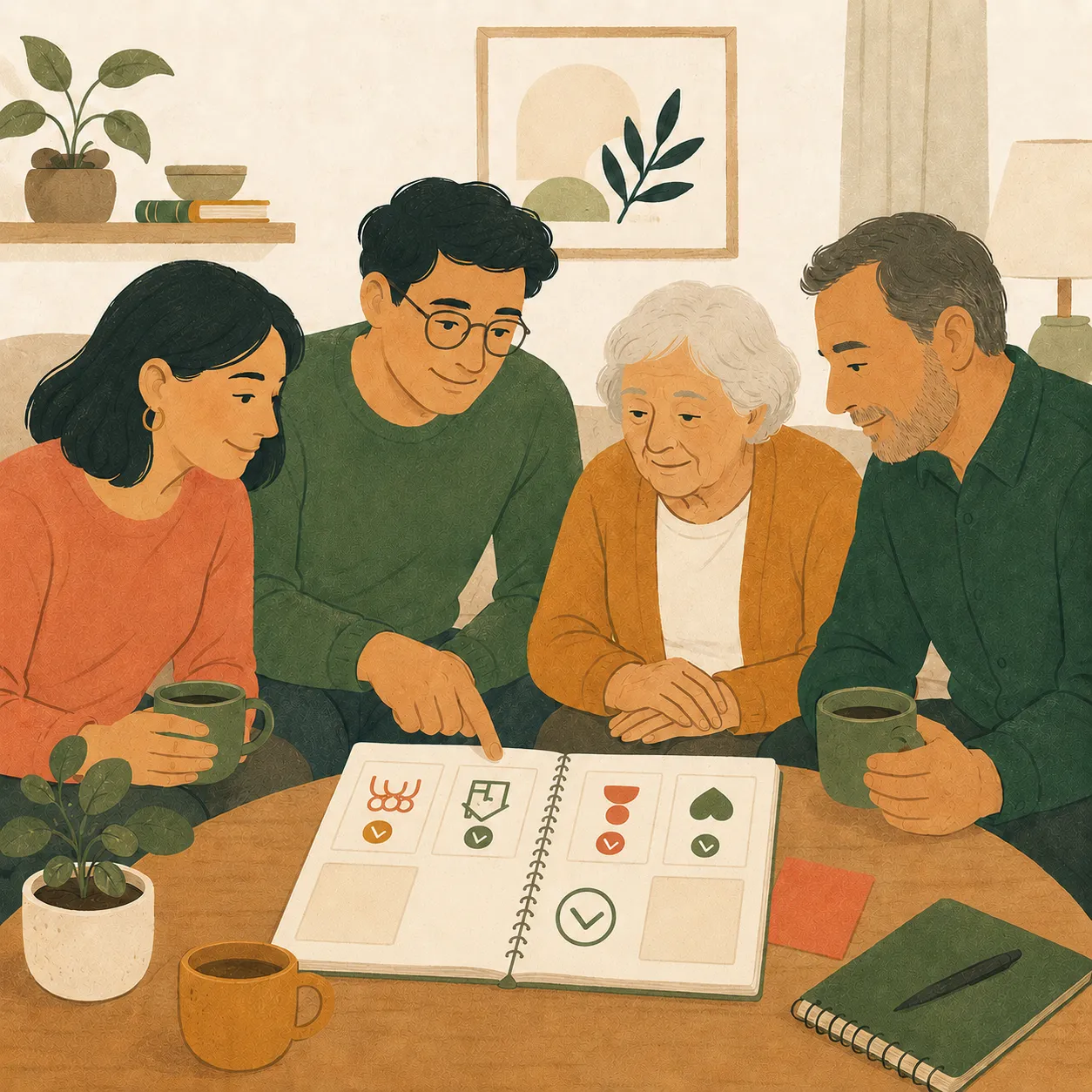
Decide now, calmly, what happens in common scenarios: a fall, a hospital stay, a bad-weather week, the primary caregiver getting sick. Even rough answers beat scrambling in the moment. (For the hospital case specifically, see caregiving after a hospital discharge.)
5. Make it a living document, not a binder
The fatal flaw of most care plans is that they're written once and never updated. Needs change; the plan has to keep up. That means it can't live in one person's drawer — it has to be somewhere the whole circle can see and update, with a clear history of what changed.
That's exactly the gap a shared care log fills. Instead of a static document, your plan becomes a living record: check-ins, concerns, owners, and handoffs all in one place, current by default. It's the practical form of everything in how to coordinate care for aging parents.
Foveia gives your family one shared, always-current home for the plan — so it's there when you need it, not six months out of date. Pair it with the elderly parent check-in checklist and the important documents checklist so the plan has both a weekly habit and the documents behind it.
Free: the one-page care plan template
A clean one-page care plan template — recipients, meds, appointments, concerns, owners — that won't go stale in a week.
Keep reading
10 signs your aging parent may need more help at home
Subtle changes are easy to miss between visits. Ten everyday signs that an aging parent may need more help at home, and how to track them as a family.
Preventing falls at home: a room-by-room safety checklist
Falls are the leading home risk for older adults — and most are preventable. A practical, room-by-room checklist for making an aging parent's home safer.
Aging in place vs. assisted living: how to decide as a family
Should your parent stay home or move to assisted living? A clear, family-first framework for weighing safety, cost, care, and connection.